Frugal Living, Money Saving Tips, Freebies, and More!

  • 5 Tips for Beginner Couponers

    tips for beginner couponers

    Coupons can be a great money saving tool when used correctly. Other times, coupons can actually make you spend more money if you aren’t careful! Several years ago, I followed the “Extreme Couponing” trend. It was fun while it lasted, but it didn’t last too long. You can read my article The Dangers of Extreme Couponing to see why I stopped. I still have a passion for using coupons at the grocery store, but my passion has changed over time and the way I use coupons changed, too.

    Grocery expenses are one of the biggest monthly expenses in many households. Depending on the size of the family, grocery budgets cost families hundreds of dollars a month. I’ve always heard that a good budget for a family of four is between $400-$600, but I know of larger families that are able to knock their food budgets down even lower than that! Coupons are one great way to knock down the total of your grocery bill. If you are new to couponing or if you are looking for ways to improve your couponing skills, here are a few great tips to follow.

    1. Print coupons found online.

    My top 3 favorite go-to place for printable coupons are Coupons.com and SmartSource. If you aren’t a fan of ink costs, I suggest using refill ink if you are going to print a lot of coupons. Refill ink is very inexpensive. I also recommend setting your printer to “Black and White” and “Quick Print” to save money on ink.

    Related: Best Places to Find Online Printable Coupons

    2. Find coupons on brand websites.

    You can often times find coupons to your favorite products on brand webpages. If you follow a certain brand on social media, you may get updates when new coupons are released.

    3. Write to your favorite companies for coupons.

    Some companies will send you an envelope full of coupons if you ask. There are companies that will reply that they do not send out coupons, but at least you’ll know after you try.

    Related: How to Request Coupons from Companies

    4. Ask family and friends to save coupons.

    Ask your family and friends to save coupons for you when they come across any if they aren’t into using coupons. You could even have coupon swaps where you swap coupons you don’t need for ones that you do need.

    5. Don’t Use Coupons Just Because You Have Them.

    Coupons can actually cost you more money if you aren’t careful. By this, I mean that just because you have coupons for items doesn’t mean you have to purchase that item. My best advice is to use only coupons on products that you know you need and buy on a regular basis.

    How to Organize Your Coupons

    Now that you know where to find coupons, you’ll want to organize them.

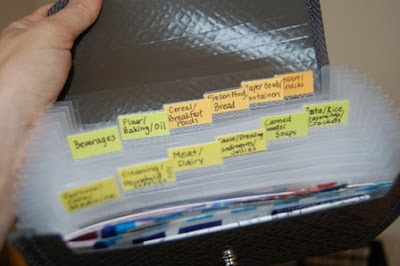
    I recommend a small accordion file that fits in your purse. These are easy to carry around and have on hand when you need it. However, the one drawback to these is that you find yourself searching and flipping through coupons at the store because they are in a big clump by categories. If you have 50 coupons in your frozen food section, you find yourself wasting time trying to find the coupon you know you have in that stack!
    save money with coupons

    You can see that I organized it like this: Personal Care/Medicine, Cleaning/Household Supplies/Pets, Meat/Dairy, Sauces/Dressings/Condiments, Canned Goods/Soups, Pasta/Rice/Seasonings/Crackers, Beverages, Flour/Baking/Oil, Cereal/Breakfast Foods, Frozen Food/Bread, Paper Goods/Baby/Containers, Desserts/Snacks. The front section was reserved for store coupons.

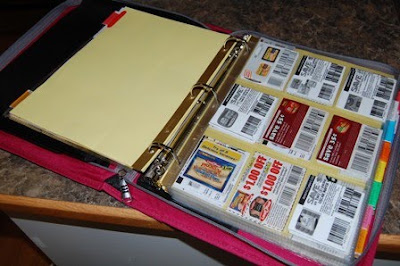
    If the accordion style does not work for you, you can organize your coupons in a coupon binder with plastic baseball card protectors. You can see each coupon when you use a coupon binder. You flip right to the section, have a picture of what you are looking for, making it easier. However, the binder is bigger, cannot fit in your purse, and you do have to take it everywhere you go to get your maximum savings. You also have to be one that doesn’t care that people see you carrying a coupon binder around the store! You just have to ask yourself, “What is funny or embarrasing about saving money?!?” You should be questioning those that give you looks why they don’t use coupons!

    save money with coupons

    To create your coupons binder, all you need is a binder that zips, dividers, and plastic baseball card sheets. You can always buy more of the dividers and baseball card sheets if you need them. It took me two hours to organize my binder. Once it is organized, it is very easy to discard the expired coupons and add new coupons. In the outside pockets of the binder, keep a pen, pair of scissors, and a calculator. In the inside pockets, keep store circulars, large coupons, and rebate forms. Keep a price book in the front of all sections so you can compare prices on certain items.

    Organizing Sections of Your Coupon Binder

    The first section of the binder is specifically for FREE coupons.

    The second section are for store coupons, including department store coupons and restaurant coupons.

    The third section is the food section divided up into these categories: Meat/Dairy/Milk, Cereal/Granola Bars/Bread/Cold Breakfast, Frozen Food, Snacks/Chips/Candy, Condiments/Sauces/Dressings, Pasta/Rice/Seasonings/Crackers/Baking, Canned Goods/Fruit Cups, Beverages.

    The fourth section is the Health and Beauty section divided into these categories. Toothpaste/Toothbrushes/Oral Care, Shampoo/Conditioner/Hair Color, Deodorant, Shaving Cream/Razors, Feminine Products, Body Wash/Soap, Make-up/Eye Care/Moisturizers/Face Wash, Sunscreen/Vitamins/Medicine.

    The fifth section is for household items and is divided into these categories: Diapers/Baby Wipes, Pets, Toilet Paper/Paper Towels/Paper Products, Laundry Care, Dish Cleaners, Multipurpose Cleaners, and Air Fresheners.

    I recommend taking a sharpie and labeling each page of coupons. For example, if you have a large Meat/Dairy/Milk file, write meat on a page and keep all of your meat coupons together, write dairy on a page and keep yogurt/butter coupons together, and milk on one page, keeping all milk coupons together.

    Remember: Do not throw your coupons away just because you do not need them that week! The key is to save them until you need the item and it is on sale. You can then pair the coupons with a sale, getting it for a very low price, or even free.

    Now that you have organized your coupons, it is time to put those coupons to use.

    Do you save money with coupons? 
  • How to Organize Coupons (For Beginners)

    There are several ways you can organize your coupons. Organizing coupons isn’t hard, but it does take a little time and effort. I recommend doing what works for you. You can use the envelope system, accordion style organizers, shoe boxes, file folders, coupon binders, and more.

    I tried the coupon binder a couple of years ago and the truth is, my coupon binder didn’t work for me. At one point it did, but I let things go. I got behind with the organizing and it ended up being a pain to keep it up and to carry it around everywhere I went! I ended up giving it away to someone that wanted it and I went right back to my old method of organizing my coupons– the accordion style organizer below.

    How to Organize Coupons

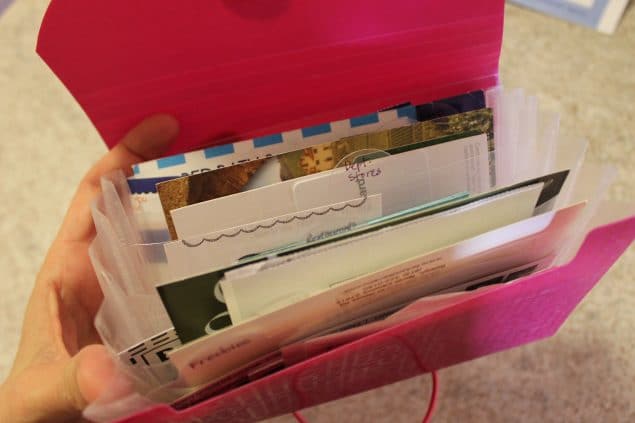
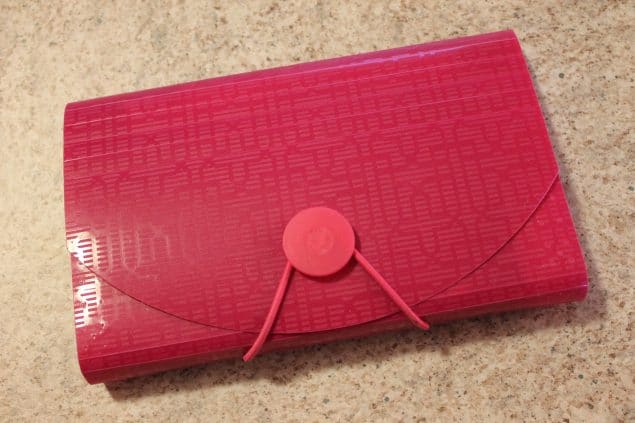
    This accordion style coupon organizer was only $1 at Target! You can also find these organizers at the dollar store. If you want a fancier one, you can pay a few dollars more. The reason I love my coupon organizer is because it’s small enough to fit in my purse! I take it everywhere with me. I never leave it at home because it’s always with me. When I need my coupons, it’s always there.

    The great part about these organizers are the slots inside used to keep your coupons organized into categories. I have my coupons organized by the following:

    1. Freebies
    2. Groceries
    3. Restaurants/Fast Food:
    4. Department Stores
    5. Rewards Cards
    6. Gift Cards

    How to organize coupons

    Here are a few of the coupons I keep inside each section for when I need them:

    1. Freebies: I keep any free coupons I receive in this section. I currently have three free product coupons for Hillshire Farm Products, 1 free class to the Tumble Gym in my area, a free medium cherry limeade or drink at Sonic, and one free bag of Ghirardelli chocolates.

    2. Groceries: I keep my manufacturers coupons in this section for any groceries that I need to purchase. Because I only print the coupons I know I need and use, this section doesn’t become out of control. I usually use the coupons up right away on my next shopping trip.

    3. Restaurants/Fast Food: I keep coupons such as pizza specials, Sonic specials, Chuck E.Cheese, or any other deals on fast food that may come my way. Although I don’t eat a lot of fast food, these come in handy when we are on the go or if we need a quick meal to pick up in the evenings!

    4. Department Stores/Retail Stores: I keep coupons such as Bed Bath & Beyond coupons, Bath & Body Works coupons, and JCPenney coupons and more in this section.

    5. Rewards Cards: I keep rewards cards such as my Walgreens Balance Rewards card, Once Upon a Child rewards card, Commissary rewards card and more in this section.

    6. Gift Cards: I keep all of my gift cards in this section. I currently have a Lowe’s gift card, Walmart gift card, Starbucks gift card, and an Olive Garden gift card in this section.

    Organizing my coupons this way works for me. I like to have everything I need in one place. Every now and then I take a few minutes to go through the organizer and toss any expired coupons. If this organizational method doesn’t work for you because you need more space, then you could always purchase a larger accordion style organizer or move up to the coupon binder.

  • Creating Extra Income Through Consignment

    Creating Extra Income Through Consignment

    The New Year is here and post-holiday bargain hunting is in high gear: it’s an expensive time of year. But it can also be a time to bring in some extra income if you’re clever. Many consignment stores have seen great success the past few holiday seasons due to their affordable prices and the influx of brand new and gently used items. And many consigners have benefited financially from their success.

    When was the last time you cleaned out your own or your kids’ closets? Get some Christmas gifts you’re not exactly thrilled with? No gift receipts? Unworn gifts (scarves, sweaters, slippers) or clothing may make a nice find for a shopper at a consignment store.

    Not sure how the consignment process works? It is usually fairly simple. Visit the local consignment shop of your choice (most only deal with apparel, shoes and accessories) and ask about their policies. Sometimes the owner will have you sign a contract stating that a percentage of the sale, anywhere from 35-55 percent, will go to the store, and the rest will be issued to you in the form of a check typically anywhere from 2 weeks to 2 months after your items have sold.

    Most consignment stores will only accept new or gently used items. Make sure articles of clothing are clean or freshly laundered and bring them in on hangers or in garment bags if possible. Some shops seek relatively contemporary clothing while others deal primarily with vintage. Occasionally if you only have a couple items to sell, the owner will purchase the items from you outright with cash or a check. If you’re also in the market to do some shopping and like what you see at the consignment store, many stores will also trade items or issue you a store credit in lieu of cash or check payment.

    Don’t have anything to sell or consign? Try shopping at a consignment store instead. The prices are usually around half of what department store retail clothing sells for. Most items are in great condition, hardly worn or sometimes never worn at all with the original tags still on them.

    In the market for a designer handbag but can’t stomach the designer prices? Consignment stores can be a great alternative. Many shops also carry beautiful and unique vintage items that are hard to find anywhere else. Try doing at least half your apparel shopping at a consignment store to save some cash in the New Year.

    Do you like creating extra income through consignment? 

    See why I love consigning clutter!

  • How to Cut Back on Eating Out (and Save Money, Too!)

    cut back on eating out

    A few years ago, my husband and I developed a bad habit of eating out at restaurants often. You can read more about that here in How We Found an Extra $1,000 in Our Monthly Budget. We were being foolish with our money, and I was ready to change. The first step towards changing was admitting that we were wasting money on eating out instead of being wise with our money and investing towards our kid’s college or our own retirement. The second step was finding out exactly how much we were wasting on eating out at restaurants. This step was the eye opener. I went through our statements and wrote down every restaurant expense. It was a shocker. We were blowing so much money on restaurants without even realizing it. Then, we added up our grocery expenses and added that to our overall total and it was at that moment that we knew we needed to make changes.

    My husband and I have been following Dave Ramsey’s baby steps towards a healthier financial life. This book is the book that motivated us to start. We do not carry debt, but just because we had the money to spend, did not mean we could blow it on anything we wanted. We wanted to be good stewards of our money and make sure it was going to the right things — our emergency fund, college, retirement, and giving.

    We made the commitment to stop eating out and to cut back on it. We didn’t give it up entirely, but we do limit it to only a few times a month. If and when we do eat out at restaurants now, it’s a treat for us because we don’t do it often.

    How to Cut Back on Eating Out (and Save Money, too!) 

    1. Add it up.

    Go through your (and your husband’s) previous month’s statements and write down every restaurant expense on a piece of paper. Add the amounts up to come up with your total. This will give you an idea on how much you are spending monthly on restaurants. Do the same for groceries and then add the two together to get your total food expenses. Take some time with your significant other to discuss the total. Too high? It’s time to make some changes! This is time to get creative and come up with a plan to cut back on eating out.

    2. Shop from your kitchen.

    If you were to place all of the food items from your pantry, refrigerator, freezer, and cupboards onto a conveyor belt at the store and let the cashier ring it up, what do you think the total would be? You’ve already purchased the items in your kitchen, now it’s time to eat them up! Each week, I take a piece of paper and divide it into five categories: Breakfast, Lunch, Dinner, Snacks, Drinks. Then, I look through my kitchen to see how many items I have that I can place in each category. I try to come up with different meals to make with what we have and write those down in each category. When I see that our items are running low in each category, that means it’s time to shop for groceries.

    3. Meal plan.

    When there’s no plan for meals, it can be easy to opt for eating out at a restaurant instead. When we weren’t meal planning, we were buying a lot of random items at the grocery store. Many times, we couldn’t even come up with full meals from those items, so we either found ourselves eating out more, or making several trips to the grocery store for food. Now that we meal plan, we only get the items we need from the store to make simple meals for a week or two. Meal planning has been a huge factor in cutting back on eating at restaurants.


    Related: 5 Reasons You Need to Start Meal Planning Today

    4. Shop for groceries. 

    Once you have a meal plan in place, then it’s time to shop for 1-2 weeks worth of meals. Shop from your list only. It may be tempting to pick up a few items here and there while shopping, but you’ll save money if you stick to the list. It’s a good idea to set a food budget every time you shop.  Use coupons to help you save more at the grocery store.

    Related: 10 Ways to Save at the Grocery Store

    5. Limit eating out at restaurants.

    If you’ve been used to eating out at restaurants, it can be hard to cut back entirely. You don’t have to give up eating out altogether, but limit it to special occasions or even just once a week. We try to limit it to once per week, if that. When we do eat at a restaurant, we try to go the cheapest route possible to save more money.

    6. Get creative if you do eat out at a restaurant.

    If and when you do eat out at a restaurant, get creative to find how you can cut your bill down even more. Do you have kids that don’t eat everything on their plate? Order one meal and split it up so they can share it. Order water instead. Skip the value meal and order from the $1 menu. It has become a game that whenever we do eat out at a restaurant now, we try to find ways to shave the cost down.


    Related: 5 Ways to Save Big When Dining Out

    7. Have date nights at home.

    The night my husband and I discussed cutting back on eating at restaurants was the same night we dropped $75 on our meal during date night. It was our anniversary dinner and we hadn’t discussed saving before then, but I’m glad we don’t spend foolishly like that anymore. For date nights, we decided to skip eating out and spend time at home cooking in our kitchen and on the grill for a delicious homemade dinner. My husband usually grills up a delicious steak and I cook the veggies inside. We love to cook, so for us, this is something we enjoy. You may not enjoy having to cook on a date night – totally understandable! But if you do, this is an option. We also watch a movie after dinner to avoid paying for a movie, drinks and popcorn at a theater.

    8. Pack your lunch.

    Prepare lunches at home and take them to work! When you have food available to eat, this helps you to avoid the temptation of wanting to go out to get something to eat from a restaurant.

    9. Pack snacks and food for the kids. 

    This has been a HUGE money saver for us. I keep a snack box filled up for the car with some juice boxes as well. When I pick my kids up from school, they choose a snack and drink from the box and that keeps them satisfied until I can get home to make dinner. If I know we are going to be out for a long period of time running errands, etc., then I’ll pack lunches for everyone and stop for a picnic or allow them to eat their food in the car.


    10. Take advantage of free meals.

    There will be times when you’ll find activities and things to do where food will be free. Take advantage of these free meal offers! There’s nothing wrong with enjoying free food if it’s being offered. Some restaurants offer free meals for kids. Plan ahead if you must eat at a restaurant and take advantage of the kids eat free feature.

    11. Skip the coffee shops.

    Coffee shop expenses can add up, too. Make your own coffee at home and you’ll save a lot! We used to go to the coffee shop to get doughnuts. Now, we purchase a big box of doughnuts at the store for under $5 and freeze them for those times my girls want to enjoy a doughnut! They haven’t asked to go back to the doughnut shop since switching to buying store-bought doughnuts.

    12. Tell your family and friends about your plan.

    If you are in the habit of going out to eat at restaurants with family or friends, they may not be as motivated as you to save on eating at restaurants. Kindly inform your family and friends of your plan and come up with ways to still enjoy each other’s company without having to spend a lot of money eating out. It may be a hard adjustment at first, but remember, this is YOUR money and you get to decide where your money goes.


    You can do this!

    At the end of each month, total up the amount spent on eating out at restaurants and the amount spent on groceries. Challenge yourself to keep these amounts as low as possible. Set time aside to talk to your significant other on your progress and come up with ways to improve, etc. Cutting out restaurant expenses can be difficult at first, but once you have a good plan in place and see how much money you are saving by not eating out motivates us to keep going! Try this for a month and see how you do! You may become hooked to this plan like we are. The money saved by not eating out will be added to college funds, retirement, and giving to others instead of wasted on restaurant expenses. That sounds like a winning plan to me!

    Do you have any tips to help cut down on eating out at restaurants? 

  • The Truth Behind 4 Money Myths

    When it comes to money –making it, managing it, and spending it – everyone has an opinion and everyone is willing to give advice. But that advice isn’t always accurate. Some of it is based on old sayings that most of us think are true, but really aren’t.

    In today’s entry, we take a look at four of those financial falsehoods, including whether money really can buy happiness and the truth about kids being “so expensive.”

    “I’ll Be Happier If I Have More Money.”

    It’s an age-old question: Can money buy happiness? The answer, in almost every case, is no. In fact, many “rich” people are just as stressed out and unhappy as Average Joes like you and I. The main reason is because that six-figure salary usually means they have a six-figure lifestyle with six-figure expenses. Which also means they’re just as stressed about paying the bills as you are. And sometimes they’re a lot more stressed because they’ve got a lot more to lose!

    “You Get What You Pay For.”

    We’ve all heard this one. The thinking is, the more you pay for something, the higher the quality will be and the longer it will last. That’s true in some instances – appliances and clothing (sometimes) to name a few – but not always. A $30 bottle of wine doesn’t necessarily taste better than a $10 bottle of wine. And will a $50,000 car last twice as long as a $25,000 car? Not really. In fact, the cheaper car might last longer!


    “Kids Are So Expensive!”

    This one is sort of true, but that’s really up to the person raising the kids (and paying for them). If you buy your kids every toy imaginable and send them to pricey schools, yes, kids will seem expensive. The trick is to avoid falling into the trap of spoiling them (hard to do sometimes, I know), and making wise decisions about what to spend money on and what not to.

    “If I Deserve a Raise, My Boss Will Give Me A Raise.”

    What most employees forget is that their boss’s first priority is improving your company’s bottom line and helping the company make money. Sometimes that means giving raises to deserving employees, but it usually means convincing hard-working employees to work even harder for the same pay as last year. In other words, your boss might give you a raise before you ask for it, but more often than not, you’ll have to ask for that raise yourself if you really want it.

  • How to Create a Budget that Really Works

    create a budget

    Whether you owe a lot or a little, one thing’s for certain: If you want to get control of your finances and pay off your debt, you need a budget, and you need a budget that works.

    If you’re one of the many Americans who has tried to budget before and failed, you aren’t alone. Many Americans have trouble making and sticking to a budget. The good news is, creating and keeping a budget that really actually works doesn’t have to be so difficult. Just follow these five steps!


    1. Write Down the Numbers

    Before you can figure out where you’re going, you have to figure out where you are now. Print out the last few months of bank and credit card statements. Get out a sheet of paper and write down how much you make every month (from work, child support, loans from your parents… everything that comes in). If it varies, write down the lowest amount you consistently make.

    Then, write down ALL of your expenses and how much you spend on them. This includes bills like the mortgage, groceries, and cable as well as all the little things like gas station snacks, Starbucks trips and Target runs. If you use cash and you don’t know where your money is going, put that money in a “cash” category.

    While you’re writing down numbers, go ahead and write down all of your debt on a separate piece of paper as well. It’s time to get honest.

    2. Set Some Tangible Goals

    For most people, budgets themselves aren’t intrinsically motivating. Therefore, if you want to succeed, you need to figure out your why. Do you want to get out of debt? Do you want to be a stay-at-home mom? Do you want to save up for a nice vacation? Figure out your motivation, and then put a tangible reminder where you can see it. For example, you might put a picture of a beach house on the fridge. This will help motivate you when times get tough.

    Related: 7 Ways to Build an Emergency Fund


    3. Adjust the Numbers Accordingly

    Once you figure out what you’re making and spending, it’s time to adjust the numbers so everything fits. On a clean sheet of paper, list ALL of the things you spend money on each month, and divvy up your income into each category. Your grand total of expenses has to be equal to or less than your income (with wiggle room!) for your budget to work.

    Do your best to make your numbers frugal, but realistic. After all, if your budget is unrealistic, you won’t be able to stick to it. Make sure you include a category for fun or anything else that you HAVE to have as well, even if the category is small.

    Depending on how much you need to cut back, you may need to get rid of some things, sell some things, work longer hours or even get another part time job. But you CAN make it work. It might just take work and sacrifice.


    4. Choose the Right Budgeting System for You

    Figuring out how much you can afford to spend is the easy part. Sticking with the budget is much harder. While having a motivating goal can help tremendously, choosing the right money management system is crucial as well. I’m a huge fan of Dave Ramsey and follow most of his advice. You can find several great books that may help you create a budget and pay down your debts. Here are two books I recommend of many:

    The Total Money Makeover: Classic Edition: A Proven Plan for Financial Fitness

    Dave Ramsey’s Complete Guide to Money: The Handbook of Financial Peace University

    5. Stick to the Budget!

    Lastly, stick to the budget and wait! It won’t be long until your debt starts slowly melting away, your savings start piling up, and you experience financial freedom like you’ve never felt before! Just imagine how amazing that will feel!

    Your debt isn’t going to get rid of itself, and the longer you wait, the worse it will get. The time to take action is now. Start today and bring yourself one step closer to financial freedom.

    Related: How to Create a Budget that Really Works

    Do you need to take better care of your finances this year? What’s standing in your way?