Frugal Living, Money Saving Tips, Freebies, and More!

  • 5 Tips for Beginner Couponers

    tips for beginner couponers

    Coupons can be a great money saving tool when used correctly. Other times, coupons can actually make you spend more money if you aren’t careful! Several years ago, I followed the “Extreme Couponing” trend. It was fun while it lasted, but it didn’t last too long. You can read my article The Dangers of Extreme Couponing to see why I stopped. I still have a passion for using coupons at the grocery store, but my passion has changed over time and the way I use coupons changed, too.

    Grocery expenses are one of the biggest monthly expenses in many households. Depending on the size of the family, grocery budgets cost families hundreds of dollars a month. I’ve always heard that a good budget for a family of four is between $400-$600, but I know of larger families that are able to knock their food budgets down even lower than that! Coupons are one great way to knock down the total of your grocery bill. If you are new to couponing or if you are looking for ways to improve your couponing skills, here are a few great tips to follow.

    1. Print coupons found online.

    My top 3 favorite go-to place for printable coupons are Coupons.com and SmartSource. If you aren’t a fan of ink costs, I suggest using refill ink if you are going to print a lot of coupons. Refill ink is very inexpensive. I also recommend setting your printer to “Black and White” and “Quick Print” to save money on ink.

    Related: Best Places to Find Online Printable Coupons

    2. Find coupons on brand websites.

    You can often times find coupons to your favorite products on brand webpages. If you follow a certain brand on social media, you may get updates when new coupons are released.

    3. Write to your favorite companies for coupons.

    Some companies will send you an envelope full of coupons if you ask. There are companies that will reply that they do not send out coupons, but at least you’ll know after you try.

    Related: How to Request Coupons from Companies

    4. Ask family and friends to save coupons.

    Ask your family and friends to save coupons for you when they come across any if they aren’t into using coupons. You could even have coupon swaps where you swap coupons you don’t need for ones that you do need.

    5. Don’t Use Coupons Just Because You Have Them.

    Coupons can actually cost you more money if you aren’t careful. By this, I mean that just because you have coupons for items doesn’t mean you have to purchase that item. My best advice is to use only coupons on products that you know you need and buy on a regular basis.

    How to Organize Your Coupons

    Now that you know where to find coupons, you’ll want to organize them.

    I recommend a small accordion file that fits in your purse. These are easy to carry around and have on hand when you need it. However, the one drawback to these is that you find yourself searching and flipping through coupons at the store because they are in a big clump by categories. If you have 50 coupons in your frozen food section, you find yourself wasting time trying to find the coupon you know you have in that stack!
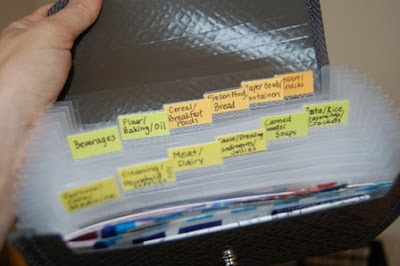
    save money with coupons

    You can see that I organized it like this: Personal Care/Medicine, Cleaning/Household Supplies/Pets, Meat/Dairy, Sauces/Dressings/Condiments, Canned Goods/Soups, Pasta/Rice/Seasonings/Crackers, Beverages, Flour/Baking/Oil, Cereal/Breakfast Foods, Frozen Food/Bread, Paper Goods/Baby/Containers, Desserts/Snacks. The front section was reserved for store coupons.

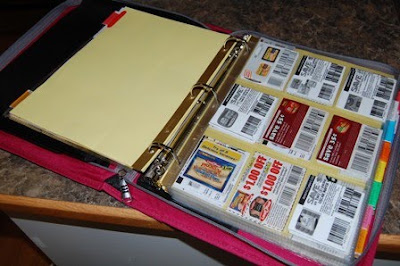
    If the accordion style does not work for you, you can organize your coupons in a coupon binder with plastic baseball card protectors. You can see each coupon when you use a coupon binder. You flip right to the section, have a picture of what you are looking for, making it easier. However, the binder is bigger, cannot fit in your purse, and you do have to take it everywhere you go to get your maximum savings. You also have to be one that doesn’t care that people see you carrying a coupon binder around the store! You just have to ask yourself, “What is funny or embarrasing about saving money?!?” You should be questioning those that give you looks why they don’t use coupons!

    save money with coupons

    To create your coupons binder, all you need is a binder that zips, dividers, and plastic baseball card sheets. You can always buy more of the dividers and baseball card sheets if you need them. It took me two hours to organize my binder. Once it is organized, it is very easy to discard the expired coupons and add new coupons. In the outside pockets of the binder, keep a pen, pair of scissors, and a calculator. In the inside pockets, keep store circulars, large coupons, and rebate forms. Keep a price book in the front of all sections so you can compare prices on certain items.

    Organizing Sections of Your Coupon Binder

    The first section of the binder is specifically for FREE coupons.

    The second section are for store coupons, including department store coupons and restaurant coupons.

    The third section is the food section divided up into these categories: Meat/Dairy/Milk, Cereal/Granola Bars/Bread/Cold Breakfast, Frozen Food, Snacks/Chips/Candy, Condiments/Sauces/Dressings, Pasta/Rice/Seasonings/Crackers/Baking, Canned Goods/Fruit Cups, Beverages.

    The fourth section is the Health and Beauty section divided into these categories. Toothpaste/Toothbrushes/Oral Care, Shampoo/Conditioner/Hair Color, Deodorant, Shaving Cream/Razors, Feminine Products, Body Wash/Soap, Make-up/Eye Care/Moisturizers/Face Wash, Sunscreen/Vitamins/Medicine.

    The fifth section is for household items and is divided into these categories: Diapers/Baby Wipes, Pets, Toilet Paper/Paper Towels/Paper Products, Laundry Care, Dish Cleaners, Multipurpose Cleaners, and Air Fresheners.

    I recommend taking a sharpie and labeling each page of coupons. For example, if you have a large Meat/Dairy/Milk file, write meat on a page and keep all of your meat coupons together, write dairy on a page and keep yogurt/butter coupons together, and milk on one page, keeping all milk coupons together.

    Remember: Do not throw your coupons away just because you do not need them that week! The key is to save them until you need the item and it is on sale. You can then pair the coupons with a sale, getting it for a very low price, or even free.

    Now that you have organized your coupons, it is time to put those coupons to use.

    Do you save money with coupons? 
  • How to Organize Coupons (For Beginners)

    There are several ways you can organize your coupons. Organizing coupons isn’t hard, but it does take a little time and effort. I recommend doing what works for you. You can use the envelope system, accordion style organizers, shoe boxes, file folders, coupon binders, and more.

    I tried the coupon binder a couple of years ago and the truth is, my coupon binder didn’t work for me. At one point it did, but I let things go. I got behind with the organizing and it ended up being a pain to keep it up and to carry it around everywhere I went! I ended up giving it away to someone that wanted it and I went right back to my old method of organizing my coupons– the accordion style organizer below.

    How to Organize Coupons

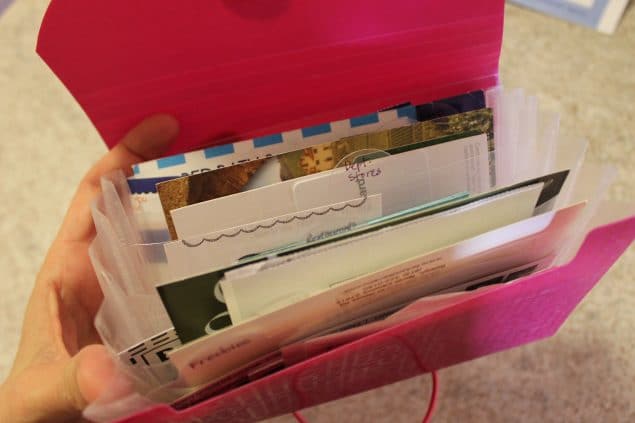
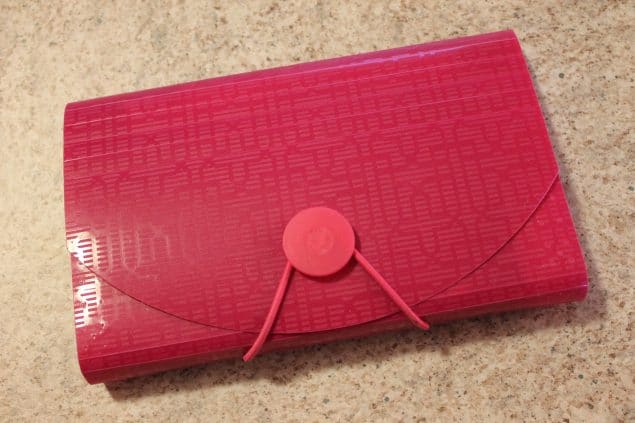
    This accordion style coupon organizer was only $1 at Target! You can also find these organizers at the dollar store. If you want a fancier one, you can pay a few dollars more. The reason I love my coupon organizer is because it’s small enough to fit in my purse! I take it everywhere with me. I never leave it at home because it’s always with me. When I need my coupons, it’s always there.

    The great part about these organizers are the slots inside used to keep your coupons organized into categories. I have my coupons organized by the following:

    1. Freebies
    2. Groceries
    3. Restaurants/Fast Food:
    4. Department Stores
    5. Rewards Cards
    6. Gift Cards

    How to organize coupons

    Here are a few of the coupons I keep inside each section for when I need them:

    1. Freebies: I keep any free coupons I receive in this section. I currently have three free product coupons for Hillshire Farm Products, 1 free class to the Tumble Gym in my area, a free medium cherry limeade or drink at Sonic, and one free bag of Ghirardelli chocolates.

    2. Groceries: I keep my manufacturers coupons in this section for any groceries that I need to purchase. Because I only print the coupons I know I need and use, this section doesn’t become out of control. I usually use the coupons up right away on my next shopping trip.

    3. Restaurants/Fast Food: I keep coupons such as pizza specials, Sonic specials, Chuck E.Cheese, or any other deals on fast food that may come my way. Although I don’t eat a lot of fast food, these come in handy when we are on the go or if we need a quick meal to pick up in the evenings!

    4. Department Stores/Retail Stores: I keep coupons such as Bed Bath & Beyond coupons, Bath & Body Works coupons, and JCPenney coupons and more in this section.

    5. Rewards Cards: I keep rewards cards such as my Walgreens Balance Rewards card, Once Upon a Child rewards card, Commissary rewards card and more in this section.

    6. Gift Cards: I keep all of my gift cards in this section. I currently have a Lowe’s gift card, Walmart gift card, Starbucks gift card, and an Olive Garden gift card in this section.

    Organizing my coupons this way works for me. I like to have everything I need in one place. Every now and then I take a few minutes to go through the organizer and toss any expired coupons. If this organizational method doesn’t work for you because you need more space, then you could always purchase a larger accordion style organizer or move up to the coupon binder.

  • Simple Ways to Start Living Frugally

    Are you trying to save money but not sure where to start? Even if you’re just beginning to learn to coupon, it can be a bit of an overwhelming experience until you get the hang of it. Below are some ideas to help get you started on the right path of living frugally.

    Eat out less. Believe it or not, it is estimated that the average person spends over $2,000 a year just eating out! Yikes! Restaurants are not the cheapest anymore, and that includes fast-food restaurants. The last bill I paid for two people amounted to $26 that included two soft drinks, two dinner meals, and a dessert. Try to create a weekly menu plan so you know what groceries to buy for the week, and only buy items you are going to eat that week. If there is a good sale going on where you might only buy it at that low price that week, go ahead and stock up on that item as long as you know you’ll use it in the future.

    Brown bag it to work. I know many people that personally buy lunch every day while working. In my area, that easily amounts to $10-$20 a day! So why not pack some left overs, or even become creative and check out some Pinterest boards for ideas.

    Find free entertainment for dates nights. The average person can spend as much as $1,800 a year on just going out along, and that does include how much you spend dining out. What I do for my date nights is simple; we subscribe to a free redbox code and use them when we receive them. That amounts to two free movies, and what ever we already made on hand. If you actually want to go out, just check your local paper! Our paper is stock full of free concerts and events that we can go to.

    There are several ways to start living frugally and to start saving money, but here’s a good start to get you going! Have any other frugal ideas? Let me know!


  • Earn Rewards: Amazon, Paypal, CVS, Macy’s, Etc.

    Join Here

    Want to earn some extra rewards this summer?! Sign up for Global Test Market! Becoming a member is easy!

    1. Click the Get Started button on the page
    2. Fill out the registration form
    3. Check your email and click the validation link!

    Global Test Market is FREE to join! **Check your email for your confirmation.

    Check your inbox!

    Thank you for joining GlobalTestMarket. You membership registration is almost complete.

    You will receive an email with a link to activate your membership very soon. You will not be able to access your account or receive online survey invitations until you confirm your membership. We look forward to your active involvement in our community!

    If you do not receive an activation email, please complete this form and we will forward you another.

    You will earn Marketpoints from completing most of the paid surveys that you can then redeem for rewards.

    rewards

    Example of products available in our US reward catalog include Amazon, PayPal, Macy’s, Kohl’s and UNICEF charity donation. Selection of rewards will depend on your country of living.

    Join for FREE!

  • Creating Extra Income Through Consignment

    Creating Extra Income Through Consignment

    The New Year is here and post-holiday bargain hunting is in high gear: it’s an expensive time of year. But it can also be a time to bring in some extra income if you’re clever. Many consignment stores have seen great success the past few holiday seasons due to their affordable prices and the influx of brand new and gently used items. And many consigners have benefited financially from their success.

    When was the last time you cleaned out your own or your kids’ closets? Get some Christmas gifts you’re not exactly thrilled with? No gift receipts? Unworn gifts (scarves, sweaters, slippers) or clothing may make a nice find for a shopper at a consignment store.

    Not sure how the consignment process works? It is usually fairly simple. Visit the local consignment shop of your choice (most only deal with apparel, shoes and accessories) and ask about their policies. Sometimes the owner will have you sign a contract stating that a percentage of the sale, anywhere from 35-55 percent, will go to the store, and the rest will be issued to you in the form of a check typically anywhere from 2 weeks to 2 months after your items have sold.

    Most consignment stores will only accept new or gently used items. Make sure articles of clothing are clean or freshly laundered and bring them in on hangers or in garment bags if possible. Some shops seek relatively contemporary clothing while others deal primarily with vintage. Occasionally if you only have a couple items to sell, the owner will purchase the items from you outright with cash or a check. If you’re also in the market to do some shopping and like what you see at the consignment store, many stores will also trade items or issue you a store credit in lieu of cash or check payment.

    Don’t have anything to sell or consign? Try shopping at a consignment store instead. The prices are usually around half of what department store retail clothing sells for. Most items are in great condition, hardly worn or sometimes never worn at all with the original tags still on them.

    In the market for a designer handbag but can’t stomach the designer prices? Consignment stores can be a great alternative. Many shops also carry beautiful and unique vintage items that are hard to find anywhere else. Try doing at least half your apparel shopping at a consignment store to save some cash in the New Year.

    Do you like creating extra income through consignment? 

    See why I love consigning clutter!

  • FREE Smithsonian Documentary iTunes Downloads

    Head on over to iTunes to download these first episodes of various Smithsonian documentaries for FREE: