Frugal Living, Money Saving Tips, Freebies, and More!

  • 10 Emergency Pantry Meals When Money Is Tight (Cheap Meals From What You Already Have)

    When money is tight, the pantry becomes the most important place in the house. Before running to the store—or stressing about what to cook—there are often simple ingredients already sitting on the shelves that can turn into real meals.

    These emergency pantry meals are built for real life: busy families, tight budgets, and those weeks when grocery money just isn’t stretching far enough. Nothing fancy, nothing complicated—just practical meals you can make from basic pantry staples.

    If you’ve ever asked, “What can I cook when I have no money?” or “What meals can I make from pantry ingredients?”—this list is for you.

    What Counts as Pantry Staples?

    Before jumping into the meals, here are the kinds of foods that usually make these recipes possible:

    • Rice
    • Pasta
    • Canned beans
    • Canned tuna or chicken
    • Bread or tortillas
    • Eggs
    • Peanut butter
    • Canned vegetables or soups
    • Basic seasonings (salt, pepper, garlic powder, Italian seasoning)

    Most of these are affordable and shelf-stable, which makes them perfect for emergency meals or stretching a grocery budget.

    10 Emergency Pantry Meals

    1. Rice and Beans Bowl

    One of the most reliable budget meals is rice and beans. It’s filling, inexpensive, and easy to customize.

    What you need:

    • Rice
    • Canned beans (black, pinto, or kidney)
    • Salt, butter, or seasoning

    Optional add-ins: cheese, hot sauce, frozen vegetables

    Cook the rice, heat the beans, and mix together. That’s it. It’s simple, but it works when you need a filling meal fast.


    2. Buttered Noodles with Seasoning

    Pasta is one of the cheapest pantry staples you can keep on hand.

    What you need:

    • Pasta
    • Butter or oil
    • Garlic powder, salt, or Italian seasoning

    Optional add-ins: Parmesan cheese, canned chicken, frozen peas

    This is a go-to meal when groceries are low. It’s quick, kid-friendly, and filling.


    3. Tuna Rice Skillet

    This is a great protein-packed meal using pantry basics.

    What you need:

    • Cooked rice
    • Canned tuna
    • Mayo or butter
    • Salt and pepper

    Optional add-ins: peas, corn, or a splash of soy sauce

    Mix everything together in a skillet or bowl. It stretches a small can of tuna into a full meal.


    4. Eggs and Toast (Breakfast for Dinner)

    Eggs are one of the most affordable proteins available, making them perfect for emergency meals.

    What you need:

    • Eggs
    • Bread
    • Butter

    Optional add-ins: cheese, ketchup, leftover vegetables

    Scramble, fry, or boil the eggs and serve with toast. Simple, fast, and filling.


    5. Poor Man’s Quesadillas

    This is a flexible meal that works with very little.

    What you need:

    • Tortillas or bread
    • Cheese (if available)
    • Optional beans or leftovers

    Warm in a skillet until crispy and melted. Even without cheese, buttered tortillas can work in a pinch.


    6. Canned Soup Upgrade Meal

    A single can of soup can stretch much further than you think.

    What you need:

    • Canned soup
    • Rice, pasta, or crackers

    Optional add-ins: canned chicken, frozen vegetables

    Add rice or pasta to bulk it up and turn it into a full meal for the family.


    7. Bean and Cheese Toast or Wraps

    Beans are one of the best budget-friendly proteins.

    What you need:

    • Canned beans
    • Bread or tortillas
    • Cheese (optional)

    Optional add-ins: salsa, seasoning, hot sauce

    Mash or heat the beans and spread onto bread or wrap in a tortilla.


    8. Simple Fried Rice (Pantry Version)

    Fried rice is perfect for using what you already have.

    What you need:

    • Cooked rice
    • Eggs
    • Soy sauce or salt

    Optional add-ins: frozen vegetables, leftover meat

    Cook everything in a skillet and season to taste. This is one of the best “clean out the fridge” meals.


    9. Peanut Butter Sandwich Meal

    When everything else is gone, this is a lifesaver.

    What you need:

    • Bread
    • Peanut butter

    Optional add-ins: jelly, banana slices, honey

    It’s simple, filling, and provides protein and energy when you need it most.


    10. Pasta with Tomato Sauce

    A classic pantry meal that always works.

    What you need:

    • Pasta
    • Canned tomato sauce or diced tomatoes
    • Oil or butter
    • Seasonings

    Optional add-ins: beans or canned meat

    This is an easy, comforting meal that stretches far for a low cost.


    Tips for Stretching Pantry Meals Even Further

    If you’re trying to make food last longer, here are a few simple tricks:

    • Add rice or pasta to soups to bulk them up
    • Mix beans into almost any dish for extra protein
    • Use eggs to stretch meals further
    • Season well—simple food tastes better with seasoning
    • Freeze leftovers for another emergency meal later

    Building a Simple Emergency Pantry

    If you want to avoid stressful weeks like this, start slowly building a small emergency pantry.

    Try keeping:

    • 2–3 bags of rice or pasta
    • 4–6 cans of beans
    • A few cans of tuna or chicken
    • Peanut butter
    • A few canned vegetables or soups
    • Basic spices

    You don’t need a full stockpile—just enough to cover a few meals when things get tight.


    Final Thoughts

    Emergency pantry meals aren’t about perfection—they’re about getting through the week with what you have. These simple, low-cost meals can help stretch your budget, reduce stress, and keep your family fed even when groceries are running low.

    Sometimes the best meals aren’t fancy… they’re just the ones that get the job done.

  • 50 Things Frugal Families Have Stopped Buying to Save Money

    If it feels like everything costs more this year, you’re not imagining it. From groceries to household basics, everyday expenses have climbed in a way that forces many families to rethink how they spend.

    The good news is this: frugal families aren’t just cutting joy out of life—they’re simply becoming more intentional about what they buy and what they can live without.

    Over time, these small decisions add up in a big way.

    Below are 50 things frugal families have stopped buying to save money each month, reduce waste, and make their budgets work a little harder.

    FRUGAL LIVING TIP CATEGORIES

    Food & Grocery Spending

    1. Bottled water

    Reusable bottles and filtered pitchers make this an easy cut.

    2. Pre-cut fruit

    Whole fruit is almost always cheaper.

    3. Individually packaged snacks

    Buying in bulk and portioning at home saves money fast.

    4. Store-bought lunches

    Packing lunch consistently is one of the biggest budget wins.

    5. Convenience store drinks

    These are often marked up far more than grocery store options.

    6. Name brand pantry staples

    Rice, pasta, flour, and sugar are usually identical in store brands.

    7. Grocery bakery items

    Homemade desserts cost less and last longer.

    8. Meal delivery kits

    Convenience is high—but so is the cost.

    9. Fast food multiple times per week

    Even small runs add up quickly.

    10. Trendy viral foods

    Not every social media food trend is budget-friendly.


    Household & Cleaning Costs

    11. Name brand cleaning products

    Store brands often perform just as well.

    12. Paper towels for every spill

    Reusable cloths reduce long-term spending. (Here are my favorite cleaning cloths that I still have!)

    13. Disposable mop pads

    Washable pads last much longer.

    14. Single-use cleaning wipes

    Spray bottles + cloths are cheaper over time.

    15. Dryer sheets

    Dryer balls are a reusable alternative. (I ordered this set on 09/2023 that I still use!)

    16. Expensive air fresheners

    Simple DIY options often work just as well.

    17. Fancy laundry detergents

    Basic detergent still gets the job done.


    Home & Lifestyle Spending

    18. Seasonal home decor every year

    Reusing decorations saves a lot over time.

    19. Trendy storage containers

    Repurposing what you already have works just fine.

    20. Duplicate kitchen gadgets

    Multi-use tools are more practical and cheaper.

    21. Brand new furniture

    Secondhand and marketplace finds stretch budgets.

    22. Excess home décor items

    Less clutter usually means less spending.

    23. Constant room “refreshes”

    Small updates beat full redesigns financially.


    Subscriptions & Digital Spending

    24. Extra streaming services

    Rotating subscriptions saves monthly money.

    25. Unused app subscriptions

    Many families forget what they’re paying for.

    26. Cable TV packages

    Streaming options are often cheaper.

    27. Subscription boxes

    Convenient—but rarely necessary.


    Kids, Family & Personal Spending

    28. Brand new kids’ clothes every season

    Hand-me-downs and thrift stores go further.

    29. Excess toys

    Fewer toys often means more creativity.

    30. Greeting cards for every occasion

    Printable or homemade cards reduce spending.

    31. Expensive school fundraiser extras

    Being selective helps control spending.

    32. Trendy seasonal outfits

    Not everything needs to be new each season.


    Shopping Habits That Add Up

    33. Impulse store trips

    “Just browsing” often leads to unnecessary purchases.

    34. Buying items just because they’re on sale

    A deal isn’t a deal if it wasn’t needed.

    35. Duplicate household items

    Extra stock often becomes clutter.

    36. Fancy organizational bins

    Repurposed containers work just as well.

    37. Constant phone upgrades

    Keeping devices longer saves a lot.


    Pet & Miscellaneous Spending

    38. Expensive pet accessories

    Basics are usually all pets actually need.

    39. Unnecessary pet clothing

    Cute, but rarely essential.


    Money-Saving Mindset Changes

    40. Buying bulk without a plan

    Bulk only saves money if it gets used.

    41. Treating every convenience as necessary

    Convenience often comes with hidden costs.

    42. Buying duplicates “just in case”

    Most households already have enough.

    43. Constantly upgrading perfectly good items

    “Good enough” saves more than “new.”

    44. Overcommitting to memberships

    Gym, clubs, and programs add up quickly.

    45. Overdecorating for every holiday

    Simple décor still creates a seasonal feel.

    46. Overbuying cleaning supplies

    A few basics go further than a full cabinet.

    47. Excess beauty products

    Simplifying routines reduces waste.

    48. Buying books instead of borrowing

    Libraries remain one of the best free resources.

    49. Fancy gift wrapping supplies

    Simple wrapping still feels thoughtful.

    50. Shopping emotionally

    This is often the biggest budget leak of all.


    FREQUENTLY ASKED QUESTIONS

    What are the easiest things to stop buying to save money?

    Start with subscriptions, takeout food, bottled drinks, and name-brand groceries. These are often the fastest wins.


    How do frugal families save the most money?

    They focus on reducing recurring monthly expenses first, then adjust grocery and impulse spending.


    What is the biggest money-wasting habit in households?

    Emotional and impulse shopping is one of the most common hidden budget leaks.


    Do small savings really make a difference?

    Yes. Cutting even $5–$10 per category each week can add up to hundreds per month.

  • FREE No Spend Challenge Printable Tracker

    The Ultimate Guide to a No Spend Challenge: Your Roadmap to Financial Stability and Freedom

    Has the thought ever crossed your mind about how much money you spend on unnecessary items each month?

    The good news is that there’s a solution: the no spend challenge.

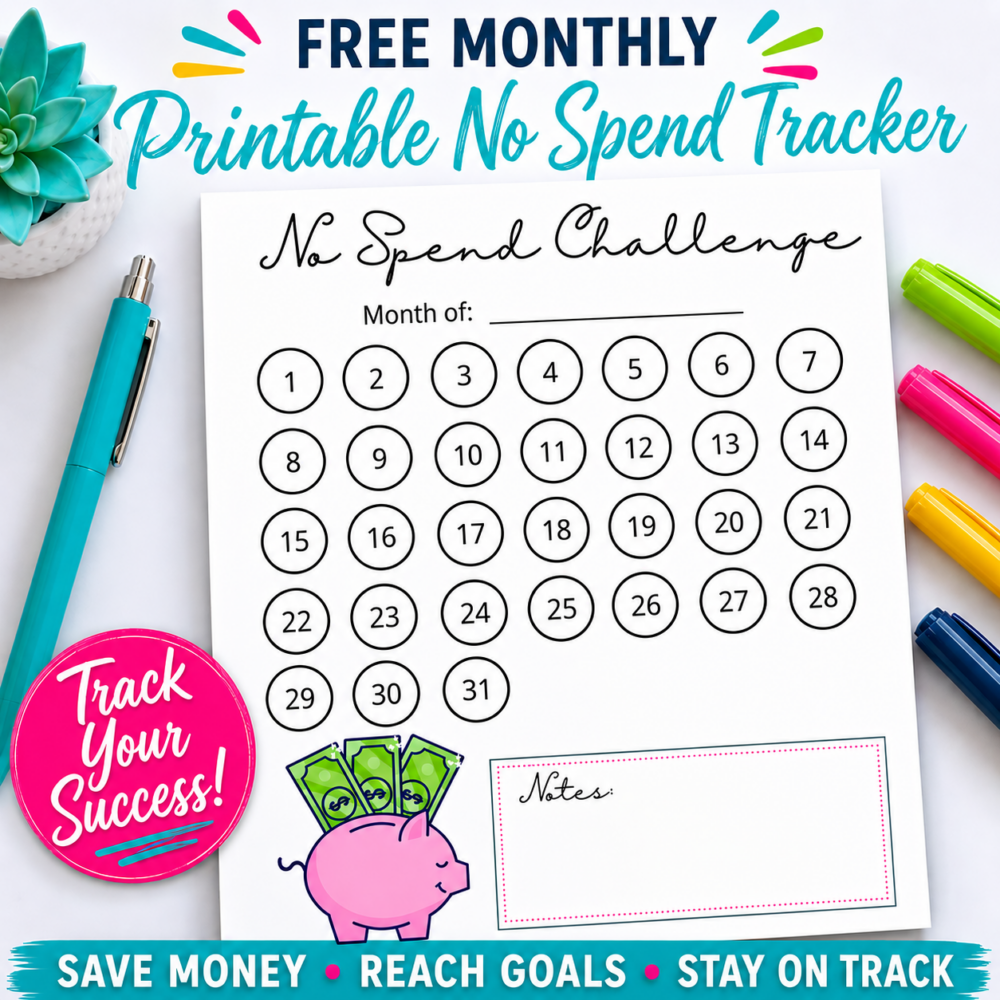
    And even better? We’ve got a free printable no spend tracker for you to help keep track of your spending throughout the month.

    Not only does this method help you monitor your spending habits, but it also brings you a step closer to achieving your financial goals.

    FREE Activities to Take Advantage of During a No Spend Challenge

    FREE Printable Savings Tracker

    FREE Printable Mortgage Payoff Tracker

    Why Use a No Spend Tracker?

    A no spend challenge, sometimes called a no spending challenge, is precisely what it sounds like.

    It’s a period of time—often a full month—where you aim to spend money only on essential monthly bills and necessities, avoiding all unneeded spending.

    This challenge offers a plethora of benefits, and using a no spend tracker amplifies these benefits. But why?

    Visual Reinforcement:

    There’s a sense of achievement when you see more green circles (not spending) than red ones (spending) on your tracker. This visual aid is a great way to stay motivated throughout the entire month.

    Tangible Control:

    In the age of digital items and products, a physical product like the free printable tracker makes a difference. It serves as a daily reminder, especially if you place it on your bathroom mirror or fridge, to be conscious of your spending habits.

    Financial Clarity:

    By the end of the month, you’ll be surprised at how much money you’ve saved.

    And those savings? They can go into your emergency fund, be used for a significant amount of money to pay down credit cards, or be steered towards other savings goals.

    Maximizing the Benefits of the No Spend Challenge

    Digital vs. Physical:

    While there are digital product versions like specific apps for tracking spending, the tactile nature of a physical product, like this printable planner, offers an unmatched experience.

    Every time you pick up that pen to fill in a circle, you’re making a conscious decision about your financial situation.

    Incorporating the Entire Family:

    The best way to make this challenge effective is to get everyone on board.

    Making it a family activity ensures that everyone is working towards a common goal. And hey, kids might find coloring the circles a fun activity!

    Savings and Financial Goals:

    The purpose of a no spend day or month is to change your spending habits over time.

    You’ll have a clearer picture of where your money goes, helping you tailor your savings and financial goals.

    Getting Started

    Download the No Spend Tracker:

    At the bottom of this article, there’s a link to an instant download of my free printable tracker.

    Fill in your email address and it will be sent to your email address. The design is simple, efficient, and US letter size. It’s the perfect tool to guide you through your next challenge.

    Set Your Own Rules:

    While there are some standard spend challenge rules, remember that you can customize this to fit your lifestyle.

    Whether you’re doing a weekly challenge or aiming for a no spend November, the rules are yours to set!

    Example Wants vs. Needs List (Optional – Customize to Fit Your Budget!)

    When starting a no spend challenge, it helps to define your wants vs. needs so you can stick to your personal spending goals.

    This list is just a guide — feel free to adjust based on what’s essential for your lifestyle and family.

    Needs (Essentials – okay to spend on):

    • Rent or mortgage
    • Utilities (electricity, water, gas)
    • Basic groceries and household staples
    • Gas or transportation
    • Insurance (health, auto, etc.)
    • Medical care or prescriptions
    • Childcare or school-related necessities

    Wants (Non-essentials – try to pause during the challenge):

    • Fast food, takeout, or coffee runs
    • New clothes or shoes (unless truly needed)
    • Home decor, candles, or seasonal items
    • Subscriptions (streaming, beauty boxes, etc.)
    • Hobby supplies or craft materials
    • Impulse Amazon or Target buys
    • Entertainment (movies, concerts, etc.)

    Tip: What counts as a “want” or “need” may be different for everyone. Use this list as a starting point and tailor it to your own spending plan!

    Stay Informed and Connected:

    Join my email list to get great ideas, new spend challenge printables, and to stay updated. And don’t forget to check out my selection results for other free printables!

    Important Points to Note

    Digital Nature of this Item:

    Though the no spend tracker is a digital file, ensure you print it out each month to make the most of the challenge.

    Remember, this free printable is for personal use only. Commercial use or reselling is not permitted.

    The Inclusivity of the Challenge:

    Whether it’s video games, physical items, or even shipping fees for a much-desired product, the no spend challenge encompasses everything. Be strict, but also ensure it’s achievable.

    Don’t Beat Yourself Up:

    If you notice more red circles than green on your tracker, it’s okay! Learn from it and make the next time better.

    Wrapping Up

    By the end of the challenge, not only will you be in a better place financially, but you’ll also gain control of your money and spending.

    The ultimate goal here? Financial freedom.

    And while the road there might seem tough, tools like our no spend tracker and the consistent effort to avoid excessive spending will make the journey smoother.

    So, if you’re embarking on this journey for the first time or even if it’s a recurring effort, remember, every little bit counts.

    Every green circle you color in on your tracker is one step closer to being on top of your finances.

    How to Complete the No Spend Tracker

    Utilizing the no spend tracker is straightforward and visually rewarding. For every day you successfully refrain from spending on unnecessary items, color the corresponding circle in a vibrant green.

    This serves as a positive affirmation of your discipline. On days where temptation wins and you find yourself spending on non-essentials, mark the day with a bold red.

    Over time, this visual representation will not only showcase your progress but also highlight patterns in your spending behavior.

    The contrasting colors serve as a quick reference, motivating you to achieve more green days and understand the triggers behind the red ones.

    Embrace the tracker as a tool for self-awareness and growth in your financial journey.

    Ready to start? Grab the free printable pdf below and let the no spend days roll in!

    Get a free no spend challenge tracker!

      We respect your privacy. Unsubscribe at anytime.

      Frequently Asked Questions

      What exactly is a no spend challenge?

      A no spend challenge is a commitment to not spend money on unnecessary items for a specific period of time, such as a day, week, or an entire month.

      The goal is to focus on your spending habits, save a significant amount of money, and ultimately achieve better financial stability.

      How does the free printable no spend tracker work?

      This free printable tracker is designed to help you keep track of your spending during the challenge. For each day you don’t spend money on unnecessary items, you fill in a circle with green.

      If you do spend, it’s marked in red. By the end of the month, you’ll have a visual representation of your spending habits.

      Can I use this printable for the entire year?

      The good news is that this design can be used repeatedly. Print it off each month, or print 12 copies for the whole year!

      I see this is a digital product. Can I share it with my family and friends?

      The digital nature of this item means it’s available for instant download.

      However, the free printable is for personal use only. I encourage sharing the product link so they can download their own, but please refrain from commercial use or redistribution.

      What if I don’t have a printer for the printable item?

      The printable is designed in US letter size, making it suitable for most home printers. If you don’t have a printer, local print shops or libraries often offer affordable printing services.

      Can I make my own rules for the no spend challenge?

      Of course! While there are general spend challenge rules, the challenge is flexible. Customize it based on your financial situation, monthly bills, and specific goals.

      How much money can I expect to save?

      The amount varies depending on your usual spending habits. Some have saved just a few dollars, while others have saved a lot of money by the end of the challenge.

      Every bit counts toward your financial goals, be it clearing credit cards, building an emergency fund, or other savings goals.

      Where can I find more such great ideas and free printables?

      Join my email list or mailing list to stay updated. Our selection results frequently include new digital items, printable planners, and other resources to help you stay on top of your finances.

      I completed my first no spend challenge. When can I start the next challenge?

      Congratulations on completing your first challenge! You can start your next challenge whenever you feel ready.

      Some people prefer back-to-back challenges, while others take a break in between. Find what works best for you.

      Remember, the purpose of a no spend day or month is not to deprive yourself but to gain control of your money and work towards financial freedom.

      It’s a great way to reflect on unnecessary and unneeded spending and make impactful changes in your life.

    • Why Groceries Are So Expensive Right Now (And How Families Can Still Save Money)

      Grocery shopping cart in supermarket representing high grocery costs for families

      Groceries have never felt more expensive. Between rising food prices, supply chain issues, and the cost of convenience, families everywhere are feeling the pinch. If you’re stressed every time you go to the store, you’re not alone.

      The good news? You can still save money on groceries without extreme couponing or eating nothing but beans and rice.

      In this post, we’ll break down why prices are rising, the hidden costs that inflate your grocery bill, and practical strategies to stretch every dollar while still feeding your family well.

      How to Stock Your Pantry on a Budget: 15 Money Saving Tips

      Why Groceries Are So Expensive Right Now

      Food costs are rising for multiple reasons — many of which are beyond our control. Understanding them can help you make smarter choices at the store.

      Rising Fuel and Transportation Costs

      • Higher fuel prices increase delivery costs for all grocery items.
      • Fresh produce shipped from across the country adds extra cost.

      Increased Production and Labor Costs

      • Farmers and manufacturers are paying more for labor and ingredients.
      • These costs are passed on to consumers.

      The Convenience Food Effect

      • Pre-cut vegetables, frozen meals, and packaged snacks cost more than making the same food at home.
      • What feels “easy” now quietly adds hundreds to your monthly bill.

      The Ultimate Guide to Meal Planning

      The Hidden Cost of Convenience Foods

      Many families buy convenience foods thinking they save time, but these items are often 2–3x the price of making it yourself.

      Why Cooking from Scratch Can Help You Save Money

      How to Save Money on Groceries Today

      Here are practical ways to cut your grocery bill starting this week:

      1. Plan Meals Ahead of Time
        • Even a simple 10-minute plan prevents last-minute, expensive takeout.
      2. Buy in Bulk or Family Packs
        • Rice, beans, pasta, and frozen proteins last longer and cost less per serving.
      3. Shop Store Brands
        • Most generic brands are identical in taste and quality to name brands.
      4. Freeze Leftovers
        • Prevent food waste and stretch meals for another day.
      5. Use Grocery-Saving Apps or Cashback Tools
        • Apps like Ibotta, Fetch Rewards, or store loyalty apps help you earn money back on groceries.
        • Save on everyday household products with P&G brandSAVER. Earn cash-back rebates, digital coupons, and rewards on select products, helping stretch your grocery budget even further.

      Budget-Friendly Meal Ideas for Families

      Here are a few quick and affordable meals that stretch ingredients and save money:

      • One-Pot Pasta with Veggies – Pasta, frozen veggies, and a simple tomato sauce
      • Chicken and Rice Bowls – Use leftover roasted chicken with rice and seasonal vegetables
      • Bean and Cheese Quesadillas – Beans, tortillas, and shredded cheese make a filling, cheap meal
      • Stir-Fry with Frozen Veggies and Rice – Quick, healthy, and inexpensive

      Conclusion

      Yes, groceries are expensive — but families can save money on groceries with a few intentional habits. Start by planning meals, buying in bulk, shopping store brands, and reducing convenience food purchases. Even small changes can save hundreds each month.

      Try these tips this week and see how much you can save. Your wallet — and your family — will thank you!

    • 10+ Ways to Reuse Jars

      Ways to Reuse Jars

      In today’s era of environmental consciousness, frugality isn’t just about saving pennies; it’s also about making sustainable choices.

      One simple yet powerful way to achieve both these objectives is by repurposing jars.

      Before you toss out that empty pasta sauce or pickle jar, consider the numerous ways it can be reused to not only save money but also reduce waste.

      Here’s a guide to reusing jars for those who have frugality at heart.

      10+ Ways to Reuse Jars

      Storage Solutions

      Pantry Organizers:

      The pantry is often the heart of a kitchen, housing everything from grains to snacks.

      But without proper organization, it can quickly become a chaotic space. This is where jars step in as brilliant and frugal organizers.

      By using jars of various sizes, you can systematically store items like pasta, rice, beans, nuts, and even baking ingredients.

      The transparent nature of jars allows for easy identification, eliminating the need to rummage through piles or opaque containers.

      Additionally, a well-organized jar pantry can help in inventory management; at a glance, you’ll know what’s running low and what’s in abundance.

      Adorn your jars with stylish labels, and you transform your pantry from a mere storage space to an aesthetically pleasing and functional area, perfectly aligned with the principles of frugal living.

      Leftover Containers:

      In our continuous quest to reduce waste and maximize resources, saving and consuming leftovers is a practical approach. Jars offer an ideal solution for storing these remaining portions.

      Their airtight seal ensures food remains fresh, locking in flavors and preventing any unwanted fridge odors from seeping in.

      Their transparent nature lets you quickly identify the contents, making it easier to plan meals around what you already have.

      Plus, using jars as leftover containers can reduce your dependence on plastic Tupperware, aligning with a more eco-friendly and health-conscious lifestyle.

      The next time you have some extra spaghetti sauce or a portion of last night’s casserole, let a repurposed jar keep it tasty and ready for your next meal.

      Spice Holders:

      Spices are the heartbeat of any kitchen, adding flavor and flair to your dishes. Storing them efficiently, however, can sometimes be a challenge. Repurposed jars come to the rescue!

      These transparent containers are perfect for holding everything from turmeric to thyme.

      The clear glass allows you to easily identify each spice, while the airtight seal ensures they retain their freshness and potency.

      Labeled jars bring added convenience, helping you locate your desired spice swiftly.

      Plus, arranging them on open shelves or inside cabinets offers a clean, uniform look, turning your spice collection into a display of culinary art.

      With jars, your spices are not just ingredients; they become part of your kitchen decor.

      Candy Jars:

      Whether you’re a fan of colorful gummies, vintage hard candies, or decadent chocolates, storing them in clear jars can turn your sweet treats into delightful displays.

      Not only do jars keep your candies fresh and free from outside contaminants, but they also offer a decorative edge.

      Arrange multiple jars on a shelf or countertop to create a mini candy store vibe in your own home.

      This approach is not only visually appealing but also functional, making it easier to access your favorite candies.

      For households with kids or frequent guests, labeled candy jars can be a hit, adding a touch of whimsy and nostalgia to your living space.

      DIY Projects

      Candle Holders:

      There’s something truly mesmerizing about the soft flicker of a candle flame. Enhance this beauty by repurposing jars into unique candle holders.

      Whether it’s tealights, votives, or pillar candles, jars provide a safe and stylish enclosure. Their transparency allows the candlelight to radiate in all directions, casting a warm and inviting glow.

      For added flair, fill the bottom of the jar with decorative items like sand, pebbles, or even coffee beans. This not only anchors the candle in place but also adds a decorative touch.

      Using jars as candle holders can be particularly enchanting during outdoor events, dinners, or simply for a relaxing evening at home.

      It’s an economical way to create a cozy atmosphere while giving old jars a glowing new purpose.

      Picture Frames:

      Memories are treasures, and what better way to showcase them than in a unique, repurposed jar? Turn your jars into inventive picture frames for a whimsical touch to your decor.

      For this, choose photos, preferably smaller ones, and roll them slightly to fit inside. Position the photo so it’s facing outward, and you’ve got a 360-degree viewable frame.

      You can fill the bottom with decorative items like sand, colored stones, or even dried flowers to anchor the picture and add depth.

      These jar picture frames can sit on shelves, desks, or mantelpieces, offering a fresh perspective on cherished memories.

      Perfect for gifting or just to add a personal touch to your space, jars can immortalize moments in a distinct and frugal manner.

      Sewing Kit:

      Every household, at some point, requires a trusty sewing kit for those unexpected rips, missing buttons, or creative craft projects.

      Transform your jars into compact, organized sewing kits. The jar’s clarity allows for easy visualization of its contents, ensuring you can quickly locate that elusive needle or the right color thread.

      You can store spools, needles, buttons, thimbles, and even small scissors in a medium to large jar.

      For added ingenuity, cushion the jar lid with a small piece of fabric stuffed with a bit of cotton – voilà, you have an integrated pincushion!

      This repurposed jar sewing kit not only ensures all your sewing necessities are in one place but also offers a touch of vintage charm to your crafting area.

      It’s a frugal and stylish solution for seamstresses and occasional menders alike.

      Craft supplies:

      Every craft enthusiast knows the struggle of keeping varied supplies organized. Jars offer an elegant and practical solution to this common dilemma.

      Their transparent bodies allow for quick identification and access, making the creative process smoother and more enjoyable.

      Store everything from buttons to beads, colored pencils to paint brushes, or even glitters and sequins in separate jars. For those who dabble in multiple crafts, label each jar by its contents or project type.

      This not only ensures that every little craft accessory has its designated spot, but it also transforms your craft area into a visually appealing workspace.

      With jars as your craft supply allies, every creative endeavor becomes a seamless blend of inspiration and organized artistry.

      Tools:

      Anyone who’s ever tried to find a specific screw, nail, or drill bit knows the importance of organized tool storage.

      Jars provide an ideal solution for this dilemma, allowing for clear visibility while keeping everything neatly in place.

      Here’s how jars can be pivotal in tool organization:

      Nuts, Bolts, and Screws: Separate and store different types and sizes of fasteners in separate jars. Label them or simply rely on the clear nature of the jars to quickly spot what you need.

      Drill Bits: Keep various drill bits in jars, categorizing them by type or size. This not only makes them easy to find but also prevents the sharper bits from causing accidental injuries.

      Brushes and Applicators: If you’re into painting or staining, jars can hold brushes and foam applicators, ensuring the bristles maintain their shape and the foam doesn’t get squished.

      Small Hand Tools: Jars can also be used for small tools like Allen wrenches, precision screwdrivers, or wire strippers, making sure they’re always within easy reach.

      Wall Mounted Jars: For those looking to save counter space, lids of jars can be screwed onto the underside of a shelf. The jars can then be twisted into place, hanging beneath the shelf, making for a neat and visually appealing storage solution.

      Safety First: A jar dedicated to safety equipment – like earplugs, small goggles, or dust masks – ensures that protective gear is always at hand.

      Implementing jars as storage in a workshop or garage doesn’t just lead to efficiency; it also promotes a safer work environment.

      By having everything neatly stored away and easy to find, you can avoid the pitfalls and frustrations of a cluttered workspace.

      Jars stand out as an inexpensive and effective organizational hack for hobbyists and professionals alike.

      Bathroom Utilities

      Soap Dispensers:

      In a world where personal touches make a home truly yours, jars provide an unexpected and chic solution for your bathrooms and kitchens: soap dispensers.

      With a simple soap dispenser pump for mason jars attachment, which can be easily found online or in craft stores, you can transform any regular jar into a stylish liquid soap or lotion dispenser.

      This not only gives a rustic charm to your sinks but also allows for customization.

      You can fill them with your favorite scented lotions or colorful liquid soaps, making them both functional and decorative.

      Plus, buying soap in bulk and refilling your jar dispensers is often more cost-effective and environmentally friendly than continuously buying smaller, plastic bottles.

      With jars, your cleansing experience is elevated to a blend of frugality, sustainability, and aesthetic appeal.

      Cosmetic Organizers:

      In the world of cosmetics, with myriad products from lipsticks to brushes, organization can be a daunting task.

      Enter the versatile jar.

      With their clear, see-through structure, jars become the perfect companion to sort, display, and easily access your beauty products.

      Use smaller jars for items like lip balms, eyeliners, or single eyeshadows. Larger jars can hold brushes, mascara, and even liquid foundations or creams.

      For those who love a touch of DIY, you can decorate your jars with ribbons, lace, or stickers to match the theme of your vanity or dressing table.

      This not only adds a personal touch but also makes the process of getting ready each day a delightful experience.

      Furthermore, by using jars, you can keep your products dust-free and in pristine condition.

      Elevate your beauty routine with this frugal yet fashionable storage solution, ensuring every makeup session starts with style and ease.

      Bath Salts & Bombs:

      For many, a relaxing bath is the epitome of self-care and rejuvenation. Enhance this luxurious experience by storing your bath salts and bath bombs in repurposed jars.

      Their airtight seal ensures that the aromatic fragrances and therapeutic properties of your bath products are preserved.

      The transparent nature of jars also adds a touch of spa-like elegance to your bathroom decor, making every bath feel like a retreat.

      You can layer different colored bath salts in a jar for a beautiful, gradient effect. Or, for those who love crafting their own bath products, jars become the perfect container for homemade salts, scrubs, and bath bombs.

      Attach a handmade label or a ribbon, and you’ve got a ready-made, thoughtful gift for any occasion.

      With jars, your bath essentials are not just stored; they’re showcased, elevating every soak to a sublime experience.

      Gardening and Outdoor Uses

      Seed Starters:

      For gardening enthusiasts or those keen on starting their plant journey, jars offer a fantastic method to kickstart seed germination.

      Their transparent nature allows you to closely monitor the progress of your seeds, witnessing the magical process of a sprout emerging and growing roots.

      To use a jar as a seed starter, fill it with a good-quality potting mix, place the seeds at the appropriate depth, and lightly water.

      Cover the jar with a piece of clear plastic or cling wrap to create a mini-greenhouse effect, ensuring warmth and humidity — essential for germination.

      Once the seeds sprout and grow a bit, they can be transplanted to larger pots or directly into the garden.

      Staring your seeds in jars not only offers a practical and frugal solution but also transforms the act into an educational and engaging experience, especially for kids.

      It’s nature and sustainability wrapped in one clear container, fostering growth in more ways than one.

      Lanterns:

      Place tea lights or small flameless LED lights inside jars and hang them or place them around your garden or patio for a cozy ambiance. Or, place strings of mini LED lights inside jars to create ambient lighting.

      This simple yet effective idea is perfect for parties, weddings, intimate dinners, and even as night lights.

      The glow emanating from the jar provides a warm, fairy-tale ambiance that can elevate any event’s atmosphere.

      Whether it’s a garden party under the stars, a beachfront wedding, or just a cozy evening on your balcony, these jar lights add a touch of magic.

      Plant Containers:

      As urban spaces become more constrained, bringing nature indoors has become both a design trend and a serene escape.

      Jars offer an ideal solution to house your beloved green companions.

      From succulents to ferns, the clear containers can turn into beautiful terrariums or simple plant pots, adding a touch of verdant elegance to any room.

      When using jars as plant containers, ensure adequate drainage for the plants.

      You can layer the bottom with small pebbles or activated charcoal before adding the potting mix. This helps in preventing water stagnation and root rot.

      For plants that thrive in humid environments, like mosses, the jar can act as a mini-ecosystem, retaining moisture and creating a humid environment.

      The transparency of the jars also means you can observe the intricate root systems, making it an aesthetic and educational experience.

      Positioned on window sills, shelves, or desks, jar-contained plants become a symbol of life, growth, and eco-friendly décor, all while championing the principles of reuse and frugality.

      On-the-Go Solutions

      Travel Snacks:

      Every seasoned traveler or on-the-go individual knows the importance of having a nutritious snack handy.

      Jars offer a sturdy and spill-proof solution for storing and transporting a variety of snacks.

      Whether it’s a mix of nuts and dried fruits, yogurt parfaits layered with granola, or even pre-made salads, jars can hold them all efficiently.

      Their compact design makes it easy to fit into bags or backpacks without the worry of crushing your food.

      Plus, the airtight seal ensures freshness and prevents any messy leaks.

      For those who are health-conscious, pre-packing snacks in jars also means better portion control and the opportunity to avoid unhealthy, last-minute food purchases during trips.

      Beyond just practicality, using jars for travel snacks aligns perfectly with the ethos of sustainability. It reduces dependency on single-use packaging and encourages mindful eating.

      The next time you’re hitting the road or catching a flight, grab a jar of your favorite snack and travel both sustainably and deliciously.

      Beverages:

      The humble jar has found its way into cafes, restaurants, and homes as a trendy and practical vessel for beverages.

      From iced coffees to smoothies, lemonades to craft beers, jars offer a touch of rustic charm while serving your favorite drinks.

      One of the benefits of using jars as beverage containers is their wide mouth, making it easy to add in ingredients, stir, and sip.

      They’re also incredibly durable, reducing the risk of easy breakage, especially when you’re enjoying an outdoor picnic or a backyard BBQ.

      For those who love experimenting, jars can also be used for creating layered drinks or infusing waters with fresh fruits and herbs.

      Seal them with a lid, and you’ve got a spill-proof drink ready for your travels or workouts. Plus, for parties, jars can be adorned with ribbons, tags, or even chalk markings to personalize each guest’s drink.

      Choosing jars for your beverages not only stands as a testament to resourcefulness and frugality but also adds a fun and aesthetic twist to your hydration habits. Cheers to sustainable sipping!

      Lunch Box:

      Step up your lunch game by repurposing jars into innovative lunch boxes.

      Whether it’s a layered salad, pasta, rice dishes, or even soups, jars can securely store a plethora of meal options, ensuring they remain fresh and appetizing.

      The vertical structure of jars is particularly perfect for layering ingredients.

      For instance, you can start with a dressing at the bottom, followed by harder vegetables or proteins, and top it off with leafy greens, ensuring that nothing gets soggy before it’s time to eat. When lunchtime arrives, simply shake, open, and enjoy!

      The airtight seal of jars is excellent for preserving the freshness of your meals, especially if you’re prepping a few days in advance.

      Plus, the glass nature ensures no unwanted flavors are imparted into your food, unlike some plastic containers.

      Transporting these is a breeze, especially with their leak-proof design. They fit comfortably in most bags, and their sturdy nature means no squished sandwiches!

      Using jars as lunch containers is not just a nod to frugality and sustainability, but it also elevates the lunchtime experience, making every meal feel a bit more gourmet.

      100 Easy Recipes in Jars

      Gifts and Decor

      DIY Gift:

      There’s an unparalleled joy in giving and receiving handmade gifts. They carry the essence of effort, thought, and personal touch. Jars serve as an ideal canvas for a plethora of DIY gift ideas that cater to diverse tastes and occasions.

      Recipe in a Jar: Layer the dry ingredients of a cookie or brownie recipe in a jar. Attach a label with the recipe’s remaining steps and wet ingredients needed. It’s a delightful treat that allows the recipient to bake and enjoy fresh goodies.

      Homemade Scrubs and Lotions: Combine natural ingredients to craft body scrubs, bath salts, or lotions. Infuse with essential oils for an added aromatic touch.

      Scented Candles: Melt wax, add fragrance or essential oils, and pour into a jar with a wick in place. Once set, you have a homemade candle ready to light up someone’s day.

      Memory Jar: Fill the jar with small notes, each jotting down a memory, quote, or reason you appreciate the recipient. It becomes a daily dose of love and positivity.

      Customized Plant Pot: Plant a small succulent or flower in the jar, creating a living, breathing gift that grows with time.

      Sewing Kit: For someone who loves to sew or might just need essentials for mending, a jar filled with threads, needles, and buttons makes for a practical and cute gift.

      Decorate the jar with ribbons, tags, or paint to add a personal flair.

      Gifting a DIY jar not only shows thoughtfulness but also champions the principles of recycling and sustainability, making the present doubly impactful.

      Vases:

      Flowers have a way of instantly brightening up a space, and when paired with the right container, their beauty is accentuated even further.

      Jars offer a simple yet sophisticated solution to showcase your floral arrangements, whether they’re freshly picked from the garden or bought from a store.

      The transparent nature of jars allows the entire beauty of the flower to be seen – from the vibrant petals right down to the often overlooked stems submerged in water.

      This creates a holistic view of the floral arrangement, making it a focal point of any room.

      Jars come in various sizes, and this versatility can be used to create diverse floral displays:

      Single Stem Showcase: Use a smaller jar to highlight the elegance of a single rose, tulip, or daisy.

      Wildflower Collection: Fill a larger jar with a mix of wildflowers for a burst of color and a touch of the countryside.

      Floating Blossoms: For a unique display, fill the jar with water and let petals or small blossoms float on top.

      To elevate the presentation further, you can tie a ribbon around the jar’s neck or even paint the jar for a more personalized touch.

      Using jars as vases is not only a testament to innovative upcycling but also adds a touch of rustic charm, making every floral display a conversation starter.

      Kitchen Uses

      Leftover Grease Storage:

      One of the little-known but highly practical uses of old jars is storing leftover cooking grease. Instead of pouring fats down the drain, which can lead to blockages and plumbing issues, pour them into a jar.

      Once filled, you can either dispose of the jar responsibly or, if using animal fats, reuse the grease for cooking, giving your dishes added flavor.

      Remember to strain out any particles from the grease to extend its shelf life and always ensure the jar is heat-resistant to prevent cracking when pouring hot grease.

      Straw Storage:

      Jars provide the perfect storage solution for straws, ensuring they remain clean and easily accessible. Placing them in a clear jar on your countertop or dining table helps keep them organized.

      Drinking Glasses:

      Save your empty jars for drinking glasses for the family! No need for purchasing drink glasses when you can save jars for this purpose.

      Holiday Decorations and Centerpieces

      Every festive table needs a centerpiece that ties the theme together and sets the tone for the celebration.

      Jars, in all their adaptable glory, can be effortlessly transformed into stunning centerpieces that capture the essence of the holiday.

      Here’s how to craft a memorable holiday centerpiece using jars:

      Floating Candles: Fill a jar halfway with water, drop in some cranberries or holly berries, and float a tealight on top. The gentle flicker of the candlelight adds a warm and intimate touch to festive dinners.

      Rustic Christmas: Layer pine cones, baubles, and sprigs of evergreen in a large jar. Intertwine with fairy lights for that magical Christmas glow.

      Harvest Festival: Fill jars with layers of corn kernels, dried beans, and lentils, representing the bounty of the harvest. Place a pillar candle on top for Thanksgiving or autumn dinners.

      Easter Spring Vase: Paint jars in pastel shades and fill them with fresh spring flowers like daffodils or tulips. Scatter a few painted eggs around the base for a complete Easter feel.

      Halloween Potion Bottles: Color water with food dye to create eerie concoctions, and label the jars with names like “Witch’s Brew” or “Goblin Elixir”. Place these at the center, surrounded by pumpkins and spiders for a spooky touch.

      Valentine’s Love Notes: Fill a jar with handwritten notes or printed love quotes rolled into tiny scrolls. Surround it with rose petals and tealights for a romantic Valentine’s dinner.

      Summer Beach Vibes: Layer colored sand, seashells, and tiny starfish in a jar to evoke the feel of a beach vacation during summer gatherings.

      Patriotic Display: Fill jars with fresh red and white flowers such as roses, carnations, or daisies. The natural beauty of the blooms contrasts wonderfully with the vibrant colors of the flag. Place mini flags in extra jars if desired.

      Each centerpiece is not just an adornment but a conversation starter, echoing the creativity and thought that went into its creation.

      By using jars as centerpieces, you champion the concepts of upcycling and sustainability while ensuring your holiday table is always beautifully decked out.

      Money Saving: Use a Jar as a Piggy Bank

      Storing Loose Change:

      Over time, those pennies, nickels, and dimes can add up. Instead of letting them scatter around in drawers or the bottom of bags, use a jar as a dedicated spot for your loose change.

      It’s surprising how quickly a jar can fill up, turning your spare coins into a nice little savings pot.

      Additionally, seeing the jar gradually fill can act as a tangible motivation to keep saving.

      Once full, you can either roll up the coins for deposit or treat yourself to something nice, truly embracing the idea of frugality and savings.

      Wrapping up

      For the budget-conscious and the environmentally friendly, jars are more than just containers—they’re opportunities.

      Each jar saved from the landfill is a testament to a sustainable lifestyle and frugality.

      It’s a small change, but with every reused jar, you’re not only saving money but also making a positive impact on the environment.

      Embrace the jar revolution and watch the savings—both monetary and environmental—accumulate.

      You may also like: 31 Uses for Coffee Cans, Baby Formula Cans, and Other Containers

      Frequently Asked Questions: Reusing Jars for Savings

      Q1: Is it safe to store food in reused jars?

      Answer: Yes, it’s safe to store food in reused jars, provided they are thoroughly cleaned and sterilized. Ensure the jar is free from any old residue or odors and that the lid seals properly to maintain freshness.

      Q2: How can I remove the label and its sticky residue from jars?

      Answer: Soak the jar in warm soapy water for a few hours or overnight. Most labels will peel off easily after soaking. For stubborn residue, a mixture of baking soda and oil (like olive or vegetable oil) can be used as a gentle scrub. A good scrub with Dawn dish soap works, too!

      Q3: Can I use jars for freezing liquids or food?

      Answer: Glass jars can be used for freezing, but it’s essential to leave enough headspace (typically an inch or more) to allow for the expansion of liquids. Ensure the jar is not cracked or chipped, and always cool the contents before freezing.

      Q4: Are all jars suitable for creating DIY candles?

      Answer: Most glass jars can be used for DIY candles. However, it’s essential to ensure that the glass can handle the heat. Jars that once held food products, like pasta sauces or pickles, are typically safe choices.

      Q5: How do I sterilize jars for food storage?

      Answer: To sterilize jars, wash them in hot soapy water and rinse well. Then, place them in a pot of boiling water for 10 minutes. Remove them carefully using tongs and let them air dry on a clean cloth.

      Q6: I’m concerned about the environmental impact of lids. What can I do?

      Answer: Some jar lids can be recycled, depending on local recycling programs. Alternatively, you can buy reusable lids made from sustainable materials or even upcycle old lids with fabric or other materials for non-food storage uses.

      Q7: Are there any foods or substances I shouldn’t store in glass jars?

      Answer: Acidic foods can etch into some types of glass over time, but most commercial food jars are designed to handle these. It’s also wise to avoid storing chemicals or non-food substances unless the jar is explicitly labeled safe for that purpose.

      Q8: Can I use reused jars for canning?

      Answer: Reused jars can be used for canning if they’re free from cracks or chips and have an airtight seal when paired with a new lid. However, always check for a proper seal after processing to ensure food safety.

      Q9: How long can I store dry goods in glass jars?

      Answer: When stored in a cool, dry place, most dry goods like beans, rice, and pasta can last for 6 months to a year in a sealed glass jar. However, always check for signs of spoilage or pests before consumption.

      Q10: Are there any creative ways to label repurposed jars?

      Answer: Absolutely! You can use chalkboard paint to create erasable labels, attach tags with strings, or use adhesive label paper to print or handwrite labels. Washi tape also offers a colorful and easy-to-change labeling method.

      By addressing these common queries, we hope to provide a comprehensive understanding of the benefits and methods of reusing jars, reinforcing their value in a frugal and sustainable lifestyle.

    • 50 Most Valuable Books to Look for At Thrift Stores

      most valuable books to look for at thrift stores

      Important note: Before buying a book you think might be valuable, always do your own research to confirm its worth. Check recent sales on sites like eBay, verify edition and condition, and look for any special markings or signatures. Book values can vary widely based on demand, rarity, and condition, so a quick check can help you avoid overpaying and ensure you’re making a smart purchase.

      Hey there, savvy bookworms and frugal enthusiasts! Are you ready to embark on a treasure hunt that won’t break the bank?

      Well, hold onto your bargain-hunting hats because we’re about to dive into the wonderful world of thrift store shopping!

      Best Days and Times to Go Thrift Store Shopping

      The Art of Thrift Shopping – Summer Edition

      Whether you’re a dedicated penny-pincher, a lover of vintage finds, or simply a book lover on a budget, this post is tailor-made just for you.

      Benefits of Thrift Store Shopping

      Thrift stores aren’t just dusty old warehouses filled with forgotten relics. Oh no, my thrifty friends, they are magical places where hidden gems patiently await discovery.

      Not only do thrift stores offer an incredible selection of pre-loved items at rock-bottom prices, but they also give you the opportunity to contribute to a more sustainable and eco-friendly lifestyle.

      It’s a win-win situation for your wallet and the planet!

      Finding Valuable Books

      Now, let’s talk about the real hidden treasures lurking within those thrift store shelves—valuable books!

      Yes, you heard that right. Among the rows of old knick-knacks and worn-out clothes, lies a treasure trove of literary wonders waiting to be unearthed.

      In this post, we’re going to reveal the secret sauce to spotting those valuable books that can potentially turn your frugal purchase into a priceless investment.

      So, grab your tote bags and sharpen your bargain-hunting senses because we’re about to set off on a thrilling journey through the pages of valuable books at thrift stores!

      Thrill of the Thrift Store Experience

      Picture yourself stepping into your local thrift store, the air filled with the scent of hidden possibilities.

      It’s like stepping into Willy Wonka’s chocolate factory, but instead of candy, you’re surrounded by racks of pre-loved clothes, shelves of old books, and tables overflowing with knick-knacks.

      It’s a place where excitement lingers in the air, and you never know what fantastic discoveries await you.

      Potential Hidden Gems Among Donated Books

      Now, let’s talk about the real stars of the thrift store show—books!

      Among the jumble of well-loved novels, there are hidden gems waiting to be discovered. Local thrift stores, estate sales, flea markets, and even garage sales can be a goldmine for valuable books.

      Think of it as a game of hide-and-seek where you get to unearth literary treasures. From rare first editions to beloved children’s books, the possibilities are endless.

      Affordability Factor

      One of the best parts about thrift store shopping is the affordability factor.

      While retail stores may charge an arm and a leg for new releases, the same books can often be found at a fraction of the price in thrift stores.

      It’s a budget-savvy bookworm’s dream come true! Imagine finding a copy of “Harry Potter and the Philosopher’s Stone” or “The Great Gatsby” for just a few bucks.

      That’s the magic of thrift store shopping – it allows you to build your book collection without breaking the bank.

      But here’s the good news – valuable books don’t always come with a high price tag. Sometimes, they’re hiding in plain sight, waiting for an open mind and an eagle eye to spot them.

      A second edition of Jane Austen’s “Pride and Prejudice” or an early copy of Roald Dahl’s “Charlie and the Chocolate Factory” could be sitting on the shelves, priced the same as any other book.

      By paying close attention to the book section, flipping through those secondhand books, and taking a closer look at title pages and original dust jackets, you might stumble upon first edition copies of beloved classics that hold much value.

      So, my frugal friends, if you’re looking for a great way to score some amazing deals, explore a world of knowledge, and maybe even make a little extra money on the side, thrift store shopping for valuable books is the way to go.

      It’s like a side hustle and a treasure hunt wrapped into one!

      Plus, it’s not just about books – you never know what other valuable items you might find along the way, from vintage clothing to vinyl records and even comic books.

      In the next sections, we’ll delve into specific types of books that are often worth a pretty penny, so get ready to dive deeper into the realm of valuable books at thrift stores.

      Remember, keep an open mind, be patient, and let the adventure unfold as you explore the shelves of your local thrift stores and beyond.

      Differentiating between valuable and common books

      When it comes to finding valuable books at thrift stores, it’s essential to sharpen your detective skills and separate the hidden gems from the common paperbacks.

      Let’s delve into the key characteristics that make a book valuable.

      Rare and First Edition Books

      Keep an eye out for rare and first edition books that can fetch a higher price. These are the holy grail of thrift store finds!

      Imagine stumbling upon an original first edition copy of J.R.R. Tolkien’s “The Hobbit” or F. Scott Fitzgerald’s “The Great Gatsby.”

      These timeless classics can be worth a lot of money, and the thrill of discovering such literary treasures is unmatched.

      Books with Collectible Qualities

      Some books have unique collectible qualities that make them highly sought after.

      Look for limited editions, books with special illustrations or prints, or books tied to popular series like the Harry Potter books.

      These gems can captivate collectors and enthusiasts, and their value often extends beyond their literary content.

      Books by Renowned Authors

      Certain authors have a devoted following, and their books tend to hold value.

      Think James Joyce, Charles Dickens, Herman Melville, or Jane Eyre’s creator, Charlotte Brontë. Their works have stood the test of time and continue to be sought after by avid readers and collectors.

      Tips for Recognizing Valuable Books

      Now that we know what to look for, let’s equip ourselves with some insider tips for recognizing valuable books hidden among the shelves of thrift stores.

      Checking for Signatures or Inscriptions

      A book signed by the author or containing a personal inscription can significantly enhance its value.

      Flip through the pages and pay close attention to the title page or endpapers for any autographs or dedications.

      Researching Authors and Titles

      Knowledge is power!

      Before your thrift store expedition, do a bit of research on well-known authors, their famous works, and any specific editions that are highly sought after.

      This background information will help you spot valuable books amidst the stacks.

      Understanding the Condition and Edition

      Assessing a book’s condition is crucial. Look for books in good shape, free from major damage or excessive wear.

      Additionally, pay attention to the edition of the book. A first edition or a second edition of a beloved classic can hold a higher price tag.

      Remember, a keen eye and an open mind are your best companions in this literary adventure.

      Keep your fingers crossed for that original dust jacket, an intact title page, or even a hidden treasure between the pages.

      And don’t forget, it’s not just about the classics. Valuable books can come in many forms, from modern releases to Pulitzer Prize winners like “To Kill a Mockingbird” by Harper Lee or Ian Fleming’s “Casino Royale.”

      With these tips in your arsenal, you’re ready to navigate the shelves of thrift stores, yard sales, and estate sales like a seasoned rare book collector.

      Stay patient, be thorough, and let the magic of thrift store shopping unfold.

      In the next section, we’ll delve into specific categories of valuable books that you should keep a special lookout for.

      Valuable Book Categories

      Classic Literature: Timeless authors and titles

      Ah, classic literature – the crown jewel of book collections!

      These timeless authors and titles have captivated readers for generations and continue to hold immense value.

      Look out for well-known names like Jane Austen, William Shakespeare, F. Scott Fitzgerald, Charles Dickens, and J.R.R. Tolkien.

      Their works, such as “Pride and Prejudice,” “Romeo and Juliet,” “The Great Gatsby,” “A Tale of Two Cities,” and “The Lord of the Rings” series, are highly sought after and can fetch a pretty penny.

      Value of classics

      Classics stand the test of time for a reason.

      They delve into universal themes, offer profound insights, and showcase exceptional storytelling.

      Their enduring value lies in their ability to transcend generations and continue to resonate with readers of all ages.

      Whether you’re a fan of the beautifully crafted language of Jane Austen or the grand adventures of J.R.R. Tolkien, classics have a special place in the hearts of book enthusiasts.

      High-demand classics

      If you stumble upon a first edition of “To Kill a Mockingbird” by Harper Lee or an early printing of “Moby-Dick” by Herman Melville, hold onto it tightly!

      These highly regarded classics are always in high demand, and their scarcity can drive up their value. Other examples include “1984” by George Orwell, “Catch-22” by Joseph Heller, and “The Catcher in the Rye” by J.D. Salinger.

      So keep your eyes peeled for these literary treasures during your thrift store adventures.

      Non-Fiction Gems

      Popular non-fiction genres

      While classics may steal the spotlight, non-fiction books also hold incredible value.

      Explore popular non-fiction genres such as biographies, history, science, and self-help.

      From inspiring memoirs by prominent figures to groundbreaking scientific discoveries, non-fiction books have the power to educate, entertain, and change lives.

      Discussing influential authors and their works

      Look out for influential authors like Malcolm Gladwell, Bill Bryson, and Yuval Noah Harari.

      Their thought-provoking works, such as “Sapiens,” “The Tipping Point,” and “A Short History of Nearly Everything,” have gained widespread acclaim and can command higher prices in the secondhand market.

      Finding valuable non-fiction books

      To find valuable non-fiction books, pay attention to Pulitzer Prize winners, books with groundbreaking research, or works that have had a significant impact on society.

      Keep an eye out for titles like “Guns, Germs, and Steel” by Jared Diamond, “The Power of Now” by Eckhart Tolle, or “The Immortal Life of Henrietta Lacks” by Rebecca Skloot.

      These gems can provide both intellectual stimulation and potential financial value.

      Collectible Children’s Books

      The world of vintage children’s books

      Children’s books have a special place in the world of collectibles.

      Vintage editions of beloved classics like “Alice’s Adventures in Wonderland” by Lewis Carroll or “Charlie and the Chocolate Factory” by Roald Dahl can bring back nostalgic memories and hold considerable value.

      Popular authors and illustrators

      Look for books by renowned authors and illustrators such as Dr. Seuss, Maurice Sendak, Beatrix Potter, and Eric Carle.

      Their timeless tales, enchanting illustrations, and limited edition releases make them highly sought after by collectors and young readers alike.

      Identifying collectible children’s books

      When searching for collectible children’s books, pay attention to limited edition releases, books in excellent condition, or those with special features like pop-ups or signed copies.

      Don’t forget to check for popular series like the Harry Potter books, as certain editions or box sets can hold significant value.

      Limited Edition and Signed Books

      Explaining the appeal of limited edition books

      Limited edition books hold a special allure for collectors. These editions often come with unique features like special covers, illustrations, or added content.

      The limited availability of these books makes them highly desirable and can result in higher prices. Keep an eye out for numbered copies, books from small presses, or special anniversary editions.

      Value of signed copies

      Books with an author’s signature can bring a sense of personal connection and increased value.

      Imagine finding a signed copy of “To Kill a Mockingbird” by Harper Lee or “Harry Potter and the Philosopher’s Stone” by J.K. Rowling.

      These autographed treasures can make a significant difference in their worth.

      Examples of limited edition or signed books to look for

      Examples of limited edition or signed books to keep an eye out for include “The Hobbit” by J.R.R. Tolkien, signed copies of “The Hunger Games” series by Suzanne Collins, or the early editions of “Casino Royale” by Ian Fleming.

      Remember to inspect books closely for signatures, inscriptions, or edition numbers to ensure you’re adding a valuable find to your collection.

      So, fellow frugal book hunters, armed with these insights into valuable book categories, embark on your thrift store adventures with excitement and an eye for hidden treasures.

      In the next section, we’ll explore strategies for successful thrift store shopping to maximize your chances of finding those valuable books.

      List of 50 Valuable Books to Look For

      While the value of books can vary greatly depending on their condition, edition, and demand, here is a list of 50 valuable books to keep an eye out for at thrift stores:

      1. “To Kill a Mockingbird” by Harper Lee
      2. “The Great Gatsby” by F. Scott Fitzgerald
      3. “The Catcher in the Rye” by J.D. Salinger
      4. “1984” by George Orwell
      5. “The Lord of the Rings” series by J.R.R. Tolkien
      6. “Pride and Prejudice” by Jane Austen
      7. “Alice’s Adventures in Wonderland” by Lewis Carroll
      8. “The Hobbit” by J.R.R. Tolkien (First Edition)
      9. “Harry Potter and the Philosopher’s Stone” by J.K. Rowling (First Edition)
      10. “Moby-Dick” by Herman Melville (First Edition)
      11. “The Chronicles of Narnia” series by C.S. Lewis (First Edition)
      12. “Brave New World” by Aldous Huxley
      13. “The Adventures of Tom Sawyer” by Mark Twain (First Edition)
      14. “The Picture of Dorian Gray” by Oscar Wilde
      15. “Lord of the Flies” by William Golding
      16. “Animal Farm” by George Orwell (First Edition)
      17. “Catch-22” by Joseph Heller (First Edition)
      18. “The Sun Also Rises” by Ernest Hemingway (First Edition)
      19. “The Grapes of Wrath” by John Steinbeck (First Edition)
      20. “A Clockwork Orange” by Anthony Burgess (First Edition)
      21. “One Hundred Years of Solitude” by Gabriel Garcia Marquez
      22. “To the Lighthouse” by Virginia Woolf (First Edition)
      23. “The Old Man and the Sea” by Ernest Hemingway (First Edition)
      24. “The Sound and the Fury” by William Faulkner (First Edition)
      25. “Slaughterhouse-Five” by Kurt Vonnegut (First Edition)
      26. “Gone with the Wind” by Margaret Mitchell (First Edition)
      27. “The Hound of the Baskervilles” by Arthur Conan Doyle (First Edition)
      28. “The Shining” by Stephen King (First Edition)
      29. “The Jungle Book” by Rudyard Kipling (First Edition)
      30. “A Farewell to Arms” by Ernest Hemingway (First Edition)
      31. “The War of the Worlds” by H.G. Wells (First Edition)
      32. “The Call of the Wild” by Jack London (First Edition)
      33. “The Adventures of Sherlock Holmes” by Arthur Conan Doyle (First Edition)
      34. “East of Eden” by John Steinbeck (First Edition)
      35. “Frankenstein” by Mary Shelley (First Edition)
      36. “The Outsiders” by S.E. Hinton (First Edition)
      37. “The Scarlet Letter” by Nathaniel Hawthorne (First Edition)
      38. “Fahrenheit 451” by Ray Bradbury (First Edition)
      39. “The Count of Monte Cristo” by Alexandre Dumas (First Edition)
      40. “The Da Vinci Code” by Dan Brown (First Edition)
      41. “A Streetcar Named Desire” by Tennessee Williams (First Edition)
      42. “The Adventures of Huckleberry Finn” by Mark Twain (First Edition)
      43. “Crime and Punishment” by Fyodor Dostoevsky (First Edition)
      44. “The Hitchhiker’s Guide to the Galaxy” by Douglas Adams (First Edition)
      45. “Anne of Green Gables” by L.M. Montgomery (First Edition)
      46. “The Secret Garden” by Frances Hodgson Burnett (First Edition)
      47. “The Iliad” by Homer (First Edition)
      48. “The Odyssey” by Homer (First Edition)
      49. “The Divine Comedy” by Dante Alighieri (First Edition)
      50. “The Bible” (Early or Rare Editions)

      Keep in mind that this is not an exhaustive list, and there may be other valuable books waiting to be discovered at thrift stores.

      Always examine the condition, edition, and demand for a book before determining its value.

      Strategies for Thrift Store Shopping

      Timing is Everything: Best days and times to visit thrift stores

      Timing is key when it comes to thrift store shopping.

      While every day is an adventure, some days offer a better chance of stumbling upon valuable books. Weekends tend to be popular, so try visiting on weekdays when the stores are less crowded.

      Mornings are often a treasure trove as fresh donations hit the shelves. Set your alarm clock and be one of the early birds to catch the worm—or in this case, the valuable books!

      Exploring seasonal sales and events

      Keep an eye out for seasonal sales and events at thrift stores.

      During special occasions like holidays or change of seasons, thrift stores may offer discounts or promotions.

      It’s a frugal book lover’s dream!

      Get into the festive spirit and take advantage of these opportunities to find valuable books while saving even more.

      Exploring Different Thrift Stores

      Don’t limit yourself to just one thrift store. Each store has its own unique collection and treasures waiting to be discovered.

      Take a tour of your local thrift stores and venture beyond the well-known ones. The smaller, lesser-known shops often hold hidden gems that others might overlook.

      Explore different neighborhoods and expand your hunting ground for the best chance of finding valuable books.

      Importance of smaller, lesser-known shops

      Remember, big things come in small packages! Smaller thrift stores may not have the same foot traffic as the popular ones, but they can be a goldmine for rare finds.

      These hidden gems often have a carefully curated selection of books and are less picked over by other shoppers.

      So, step off the beaten path and explore the lesser-known thrift stores. You might just stumble upon a valuable book that others missed.

      Networking with Store Employees

      Don’t be shy! Strike up friendly conversations with the store employees.

      They have a wealth of knowledge about the store’s inventory and can offer insights into recent donations or valuable books that might have come in.

      Plus, building rapport with the staff can create a positive shopping experience and make future visits even more enjoyable.

      Benefits of establishing relationships

      Building relationships with store employees has its perks. They might give you a heads-up when they come across valuable books or be more willing to negotiate prices.

      Establishing a friendly connection can make your thrift store adventures even more rewarding. Plus, it’s always nice to chat with fellow book enthusiasts!

      Online platforms for thrift store book hunting

      Expand your thrift store hunting grounds beyond the physical realm and step into the online world.

      There are fantastic online platforms dedicated to thrift store book hunting.

      These platforms aggregate books from various sources and offer a vast selection at affordable prices. It’s like having a thrift store at your fingertips!

      Book-related forums and websites

      Join book-related forums and websites where enthusiasts share their thrift store finds and valuable book discoveries.

      These communities are a wealth of information and can provide insights, tips, and recommendations.

      Whether you’re seeking advice or want to share your own experiences, these forums can be a treasure trove of knowledge.

      By mastering these strategies, you’ll be well-equipped for your next thrift store adventure.

      Remember, keep an open mind, have fun exploring different stores, connect with the store employees, and tap into the wealth of online resources.

      Thrift store shopping for valuable books is not just a hobby—it’s a frugal and exciting treasure hunt that can lead to extraordinary finds.

      Taking Care of Your Valuable Finds

      Storing and Preserving Books

      Once you’ve scored those valuable books from thrift stores, it’s important to store and preserve them properly.

      Find a cool, dry place away from direct sunlight to prevent damage. Bookshelves or storage boxes with acid-free materials are your best friends.

      Keep your books upright to avoid spine damage and use bookends for added support. Remember, a little TLC goes a long way in maintaining their value.

      Importance of protecting valuable books

      Valuable books deserve extra protection! Consider using acid-free archival covers to shield the dust jackets, especially for those first edition copies or books with intricate artwork.

      Avoid eating or drinking near your books to prevent accidental spills or stains.

      Treat them like the treasures they are, and they’ll reward you with years of reading pleasure and potential future value.

      Understanding Book Appraisals

      Curious about the value of your thrift store finds?

      Book appraisals can give you a clearer picture. Appraisals involve assessing factors like rarity, condition, edition, and demand to determine the value of a book.

      While professional appraisers are best suited for this task, keep in mind that not every book needs an appraisal. It’s worth considering for books you suspect may hold significant value.

      Finding professional appraisers

      Finding a reliable book appraiser is essential. Seek out reputable appraisers with expertise in rare books and valuable editions.

      Remember to consider the appraiser’s fees and always do your research before making a decision.

      Taking care of your valuable thrift store finds is crucial for preserving their value.

      By implementing proper storage techniques and exploring book appraisals when necessary, you’ll ensure your valuable books remain in good condition and potentially increase in worth over time.

      Treat them with the love and respect they deserve, and they’ll continue to bring you joy and, who knows, maybe even a substantial return on your thrifty investment.

      Selling Valuable Books

      Online marketplaces for book selling

      Ready to turn your valuable thrift store finds into extra cash? Online marketplaces offer a convenient and wide-reaching platform for selling books.

      Websites like Amazon allow you to list your books for sale to a global audience.

      Take advantage of their user-friendly interfaces and extensive customer bases to connect with potential buyers and maximize your selling potential.

      Exploring local options, such as bookstores and consignment shops

      Don’t overlook local options for selling your valuable books. Independent bookstores, used bookshops, and consignment stores might be interested in purchasing or consigning your treasures.

      These local businesses often have loyal customers who appreciate unique finds and might be willing to pay a fair price for your valuable books.

      Plus, you’ll be supporting local businesses and connecting with fellow book lovers in your community.

      Pricing and marketing valuable books

      To maximize profitability, it’s crucial to price your valuable books strategically and market them effectively.

      Research similar books on online marketplaces to get an idea of their pricing range. Consider factors like rarity, condition, demand, and current market trends.

      Create compelling book descriptions highlighting the book’s unique qualities, such as first edition status, famous authors, or beautiful illustrations. High-quality photos can also make a significant difference in attracting potential buyers.

      Negotiation strategies

      Negotiation can be an art form when selling valuable books. Be open to reasonable offers and consider offering discounts for bundled purchases or repeat customers.

      Remember, building rapport with potential buyers through friendly and professional communication can go a long way.

      However, also know your bottom line and don’t be afraid to stand firm on your asking price if you believe it reflects the book’s true value.

      Selling your valuable thrift store finds is not just about making a profit but also finding new homes for these cherished books.

      Whether you opt for online marketplaces with their global reach or explore local options to support your community, strategic pricing, effective marketing, and friendly negotiation can help you maximize your selling potential.

      Embrace the entrepreneurial spirit and turn your frugal book hunting into a profitable side hustle.

      Value of finding valuable books at thrift stores

      In the world of thrift store shopping, discovering valuable books is like finding hidden treasures amidst a sea of possibilities.

      From rare first editions to beloved classics, thrift stores offer a great chance to stumble upon books that hold both sentimental and financial value.

      The excitement of unearthing these literary gems is truly unparalleled.

      Embark on your own treasure hunt

      So, my fellow frugal adventurers, I encourage you to embark on your own treasure hunt at your local thrift store.

      Armed with knowledge about valuable books and savvy strategies, you have the power to uncover literary treasures while saving a significant amount of money.

      Step into the aisles with enthusiasm, curiosity, and an open mind—you never know what you might find!

      Love for books and the joy of thrift store shopping

      Thrift store shopping isn’t just about saving money; it’s about embracing the joy of the hunt, the thrill of the unexpected, and the love for books.

      It’s a celebration of the written word and the stories that captivate us. Thrift stores provide an avenue to build your own collection, explore different genres, and connect with fellow book enthusiasts in your community.

      So, go forth and browse the book section with an attentive eye.

      Seek out those valuable books that hold both monetary and sentimental value. Enjoy the adventure, relish the discovery, and cherish the stories that will fill your shelves.

      Thrift store shopping for valuable books is an exhilarating journey that combines frugality, adventure, and the love for all things literary.

      Happy hunting, dear readers, and may your thrift store excursions be filled with the excitement of finding valuable books that will enrich your life and imagination!