

If your grocery bill feels higher than ever lately, you are not imagining it. Food prices have increased over the past few years, and many families are working hard to stretch every dollar.
But rising prices are not always the only reason grocery spending climbs.
Sometimes, everyday shopping habits quietly raise the total without us realizing it. The good news is that many of these grocery shopping mistakes are easy to fix once you spot them.
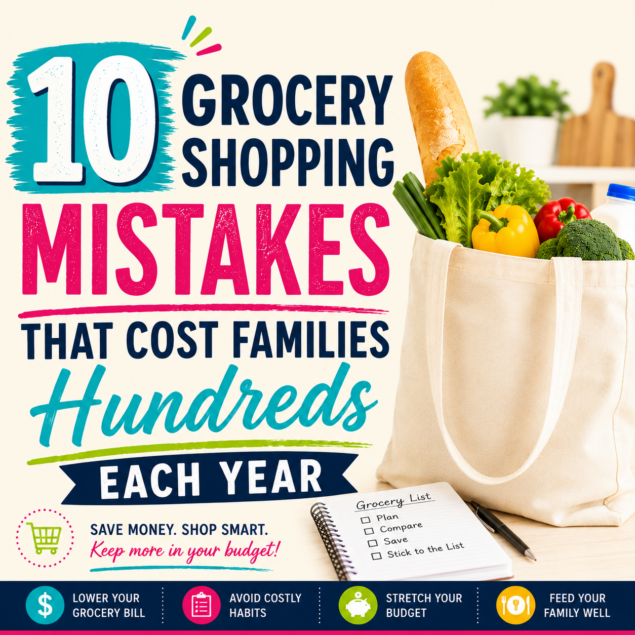
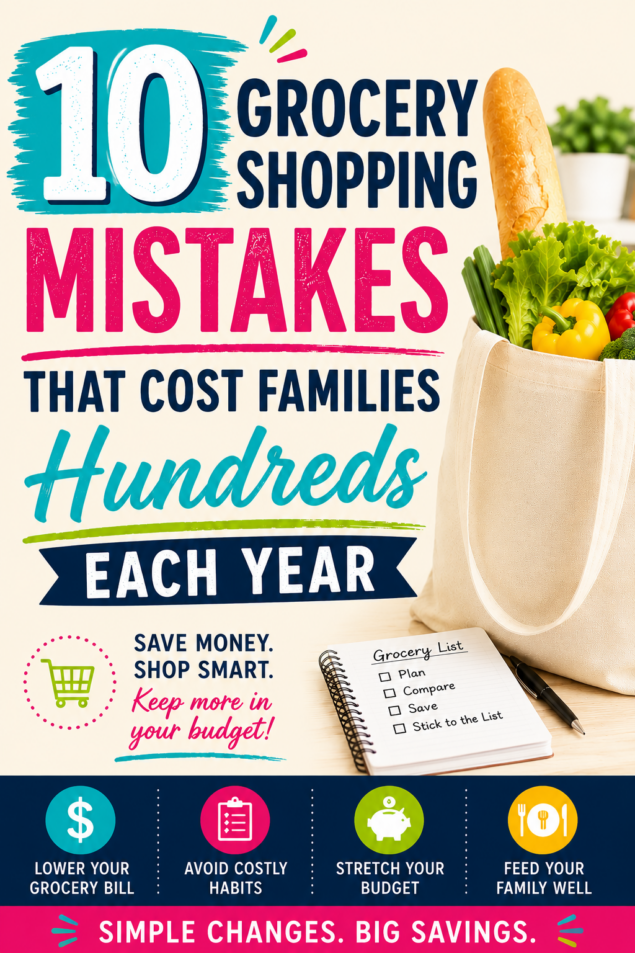
Here are some of the most common grocery shopping mistakes that may be costing families hundreds of dollars each year.
1. Shopping Without a Grocery List
Heading to the grocery store without a plan can lead to forgotten items, repeat trips, and impulse purchases.
A simple grocery list helps keep spending focused and prevents wandering through aisles adding extras that were never part of the budget.
Many families find that meal planning and list-making help reduce overspending and cut down on food waste at the same time.
The Ultimate Guide to Meal Planning
2. Ignoring Unit Prices
The sale price or package price is not always the best deal.
Unit pricing allows you to compare the cost per ounce, pound, or item and can help you spot better values between brands and package sizes.
Sometimes the larger package saves money, but not always. Taking a few seconds to compare can make a difference over time.
3. Shopping While Hungry
This may sound simple, but grocery shopping while hungry often leads to buying more than planned.
Snack foods, convenience meals, desserts, and impulse items suddenly look more appealing when you are hungry.
Eating a meal or snack before shopping may help you stick closer to your grocery budget.
How to Feed a Family Cheap on a Tight Budget
4. Making Too Many Grocery Trips
Quick trips to pick up “just a few things” can quietly add up.
Each extra visit creates more opportunities for impulse spending and often leads to buying items that were not truly needed.
Combining errands and shopping less often may help reduce both grocery costs and fuel expenses.
5. Paying Extra for Convenience Foods
Convenience can be helpful during busy seasons, but it often comes at a higher price.
Pre-cut fruit, individually packaged snacks, ready-made meals, and prepared ingredients may save time but usually cost more than preparing them yourself.
Finding a balance between convenience and savings can help keep grocery costs under control.
6. Letting Food Go to Waste
One of the biggest grocery budget problems is food that never gets eaten.
Produce spoils, leftovers get forgotten, and ingredients expire in the back of the refrigerator or pantry.
Checking what you already have before shopping and planning meals around those ingredients may help reduce waste and stretch your food budget further.
7. Staying Loyal to One Brand Without Comparing
Many of us have favorite brands, but sticking to them without comparison may cost more than necessary.
Store brands and generic products often offer similar quality at lower prices.
Trying a few alternatives can sometimes lead to noticeable savings without sacrificing taste or quality.
25 Things Frugal People Buy at Aldi
8. Buying Things Just Because They Are on Sale
A sale is only a savings if you were planning to buy the item and will actually use it.
Buy-one-get-one deals and clearance prices can tempt shoppers into spending more than intended.
Before adding sale items to your cart, ask yourself whether the purchase fits your meal plan and budget.
9. Forgetting to Check the Pantry and Freezer First
It is surprisingly easy to buy duplicates when you forget what you already have at home.
Checking the pantry, refrigerator, and freezer before making a grocery list can prevent unnecessary purchases and help you build meals around ingredients you already own.
Many families call this “shopping your pantry first.”
How to Stock Your Pantry on a Budget
10. Buying More Than You Can Use
Buying in bulk is not always the money-saving win people expect.
If food spoils before it is eaten or sits unused for months, the savings disappear.
Bulk shopping works best for products your family regularly uses and can reasonably store and finish.
Pin it:

Final Thoughts
Saving money on groceries does not always require extreme couponing or cutting out favorite foods.
Often, the biggest grocery savings come from paying attention to everyday shopping habits and making small changes over time.
If your grocery bill feels too high, taking a closer look at these common grocery shopping mistakes may help you keep more money in your budget while still feeding your family well.