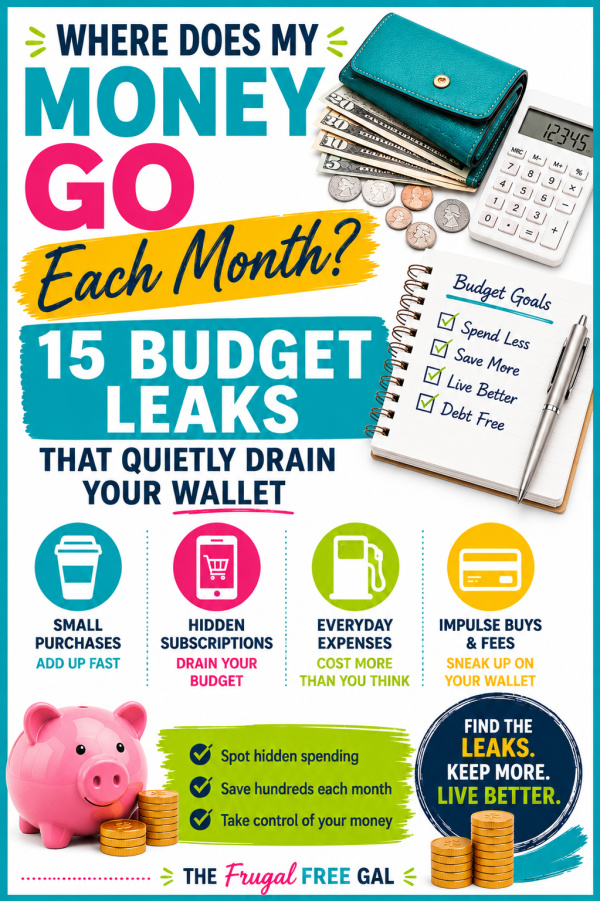

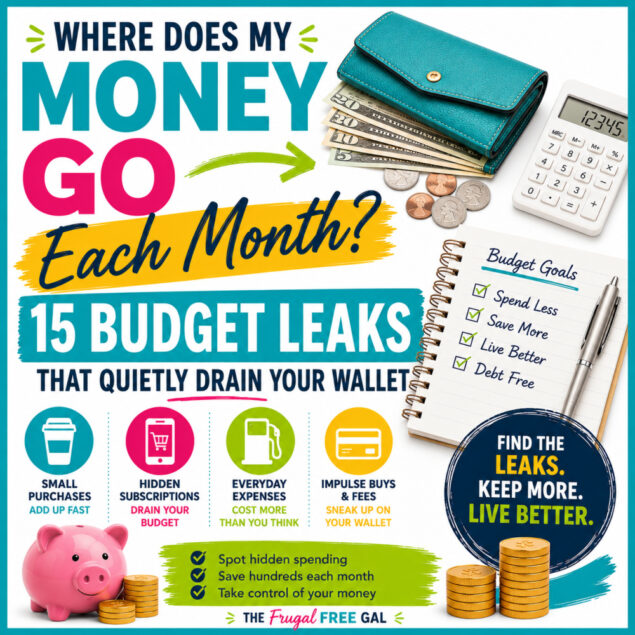
Have you ever looked at your bank account and wondered, “Where does my money go each month?”
You’re not alone.
Many families pay their bills on time, avoid major shopping sprees, and try to stick to a budget. Yet somehow there never seems to be much money left at the end of the month.
The reason often isn’t one big purchase. It’s a series of small expenses that slowly drain your wallet without you realizing it.
These hidden budget leaks can add up to hundreds—or even thousands—of dollars each year.
If you’re wondering where your paycheck goes every month, here are 15 common budget leaks to watch for and how to stop them.
1. Food Delivery Fees
Food delivery can be convenient, but the extra costs add up quickly.
Many orders include:
- Delivery fees
- Service fees
- Tips
- Higher menu prices
A meal that costs $25 at a restaurant can easily turn into a $40 purchase when delivered.
Money-Saving Tip:
Choose pickup when possible or keep a few quick meals on hand for busy nights.
2. Convenience Store Purchases
Stopping for a drink, snack, or energy drink may not seem expensive.
However, spending $10 three times per week adds up to more than $1,500 per year.
Money-Saving Tip:
Pack snacks and drinks from home before leaving.
3. Forgotten Subscriptions
Many people pay for subscriptions they rarely use.
Common examples include:
- Streaming services
- Music subscriptions
- Gaming memberships
- Fitness apps
- Cloud storage plans
Money-Saving Tip:
Review your bank statement every month and cancel unused subscriptions.
12 Monthly Bills You Forgot You’re Paying and How to Cancel Them (+ Get a free printable subscription tracker!)
4. Daily Coffee Runs
A coffee here and there doesn’t seem like much.
But spending $6 per day on coffee can cost more than $2,000 annually.
Money-Saving Tip:
Brew coffee at home and use a travel mug.
5. Extra Grocery Store Trips
One of the biggest budget leaks happens when you run into the store for “just one thing.”
Many shoppers leave with far more than they intended to buy.
Money-Saving Tip:
Create a weekly shopping list and limit extra trips.
6. Buy Now, Pay Later Purchases
Services that split payments into smaller installments can make spending feel easier.
The problem is that multiple payments can quickly pile up.
Money-Saving Tip:
Treat Buy Now, Pay Later purchases like any other debt and use them sparingly.
7. Impulse Amazon Purchases
Online shopping makes it easy to buy things in seconds.
Those small purchases often feel harmless until you review your monthly spending.
Money-Saving Tip:
Wait 24 hours before placing non-essential orders.
8. Gas Station Snacks
Gas station food and drinks are often significantly more expensive than grocery store prices.
Money-Saving Tip:
Keep snacks and drinks in your vehicle when possible.
9. In-App Purchases
Games and mobile apps frequently encourage users to spend small amounts of money.
A few dollars here and there can become a surprisingly large monthly expense.
Money-Saving Tip:
Set a monthly entertainment spending limit.
10. Name-Brand Loyalty
Sometimes paying extra for a brand isn’t worth the additional cost.
Money-Saving Tip:
Compare store brands and generic alternatives.
11. Unused Memberships
Gym memberships, warehouse clubs, and other memberships can become expensive if you’re not using them regularly.
Money-Saving Tip:
Evaluate memberships at least once per year.
12. Bottled Water
Buying bottled water regularly can quietly drain a budget.
Money-Saving Tip:
Use a reusable water bottle whenever possible.
13. Last-Minute School Expenses
School fundraisers, class parties, spirit days, and activity fees can add up throughout the year.
Money-Saving Tip:
Create a small sinking fund specifically for school-related expenses.
14. Retail Checkout Temptations
Stores place low-cost items near the register for a reason.
These purchases seem insignificant but can add up over time.
Money-Saving Tip:
Stick to your list and avoid browsing checkout displays.
15. The “It’s Only $20” Mindset
This may be the biggest budget leak of all.
Many purchases get justified because they’re “only” $20.
The problem is that several $20 purchases each week can easily add up to hundreds of dollars per month.
Before buying something, ask yourself:
- Do I need it?
- Will I still want it next week?
- Is there a less expensive option?
- Does this purchase support my financial goals?
How to Find Your Own Budget Leaks
If you’re still wondering where your money goes each month, try this simple exercise.
Review your bank and credit card statements from the past 30 days.
Highlight every purchase under $25.
Then total them.
Many families are shocked to discover how much money has gone toward small purchases they barely remember making.
How Much Could These Budget Leaks Be Costing You?
Let’s look at a simple example:
| Expense | Weekly Cost | Annual Cost |
|---|---|---|
| Coffee Run | $30 | $1,560 |
| Convenience Store Stops | $20 | $1,040 |
| Food Delivery Fees | $15 | $780 |
| Impulse Purchases | $25 | $1,300 |
That’s $4,680 per year from just a few common spending habits.
The Bottom Line
If you’ve ever wondered, “Where does my money go each month?” the answer may be hiding in your everyday spending habits.
Small purchases often seem harmless in the moment, but they can quietly drain your wallet over time.
By identifying these common budget leaks and making a few intentional changes, you may be able to free up hundreds of dollars each year without feeling deprived.
Frequently Asked Questions
What are budget leaks?
Budget leaks are small recurring expenses that slowly drain your finances without providing much long-term value.
Why do small purchases add up so quickly?
Small purchases often happen frequently, making them easy to overlook. Over weeks and months, those expenses can add up to hundreds or thousands of dollars.
How do I figure out where my money is going?
Review your bank statements, credit card transactions, and subscription payments from the last month. Look for recurring expenses and frequent small purchases.
Should I stop spending money on fun things?
Not at all. The goal is to spend intentionally. Focus on cutting expenses that don’t bring much value while keeping room in your budget for things you truly enjoy.
Pin it: