Frugal Living, Money Saving Tips, Freebies, and More!

  • Save Your Free Samples for Traveling

    Do you sign up for free samples on a regular basis? I do!

    If you know you will be traveling soon, I recommend saving your free samples for traveling.

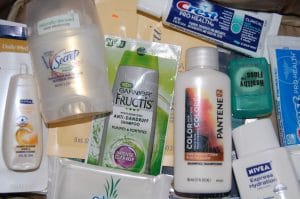
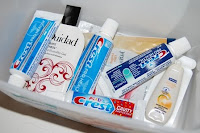
    Above, you can see my stash of free samples. I have travel size items such as deodorant, lotion, toothpaste, floss, shampoo and conditioner, and more.

    When I get ready for traveling, I gather all of my freebies together into a large ziploc back and bring them with me! I have done this in the past and they come in handy.

    I have a new stash ready to take with me, saving money and space!

  • Ways to Save on Travel Insurance

    ways to save on travel insurance

    5 Clever Ways to Save On Travel Insurance

    Travel insurance is important whether you are just planning to go on a weekend trip out to the countryside or go on a back-packing trip around the world. Essential as it is, there is still a need for people to find the best deal available in order to save on money. There are various travel insurance policies and they can cover travelers for different areas of the world, for various lengths of time and insure a whole lot of different things.

    If you are about to go on a trip and are looking for ways to save on travel insurance, here are 5 clever ways to save on travel insurance:

    1. Check if you are already covered. There are some banks that offer their clients free travel insurance depending on their account type. Check if the account you have with your bank makes you eligible for free travel insurance coverage courtesy of your bank. If you are, then you don’t have to buy insurance for your travel. You have to understand however that the travel accident insurance commonly offered by credit companies only cover you under specific circumstances. You have to be aware of such circumstances to know if this type of insurance is appropriate for you. Also, make sure that you declare any medical conditions and other important things lest the policy gets invalidated.

    2. Look for specialist policies if you are going away for long periods. It is essential for you to look for a specialist policy if you’re going on a long trip i.e. a ‘gap year’ trip because a lot of annual insurance policies are limited to only 30 days. If you are the adventurous type and your trip involves hang gliding, skiing and other such activities, a specialist insurance policy is ideal.

    There are some insurance companies that offer winter sports coverage however you may need to pay additional costs. If you’re into extreme sports or activities, check with the company if they have an extra premium that covers these activities if only for a short period of time. This could at times be cheaper than buying annual insurance policy from a specialist insurer.

    3. Get only the coverage you need. It is not wise to pay for coverage you don’t actually need. An insurance agent would naturally coax you into buying an entire policy, telling you that you need all coverage included but if you look closely, there are covers that are really a waste of your money. For example, you don’t need baggage coverage if you are not taking away any valuables with you. It is even cheaper to just have your valuables insured with household insurance.

    4. Decide whether to get a single trip policy or an annual travel policy. If you are planning to go on a trip more than once within a year, you will save more money by purchasing annual travel insurance instead of buying insurance for every trip you take.

    5. Don’t buy travel insurance at the last minute. Some people hoping to find great bargains tend to wait till the last minute to buy travel insurance and often, they end up with no other options but to bundle in travel insurance. Bundled trip insurance is not always a good thing because they are often overpriced compared to other plans. If you really want to save on trip insurance, take the time to search out better deals and don’t wait until the last minute to purchase.

  • Emergency Savings: Why It’s Important

    My Story:

    I was on my way to church yesterday when I noticed that my 2004 F-150 truck (yes, I am a truck gal–I’m from Texas!) was a bit shaky. I started to think, “Not again, I just had a tune up after this same problem a few months back,” that ended up costing a pretty penny. The truck would shake when I accelerated up to about 40mph and would shake when I was sitting at the stoplight. I started to worry a little. On the way home from church, I noticed that the engine light was on. Uh-oh. I got even more worried. I had never seen that happen before. We are down to one vehicle since we gave our other car away in September. That car was in no shape to drive, and needed to go. We plan to purchase a new or used vehicle here soon within the next month (stay tuned to a HUGE event taking place in March that I cannot wait to tell you about!) But for now, the truck is all we have.

    Yesterday was Sunday so I knew I would have to wait until today to take it in to the shop. I always take it to the Ford dealership because I trust them to do right and also knew that I had $33.00 in Owner Advantage rewards saved up to use on whatever it was that needed to be fixed. I knew that I would be paying out of pocket for something, but I didn’t know exactly what. I set my alarm this morning to get up and have myself and my daughter dressed so that I could sit in line before 7am when the maintenance shop opened. Once I got to the dealership I was told that it would be about an hour wait. My daughter and I found plenty to do to entertain ourselves. I bought a new iPhone for my birthday and we had fun playing with some of the iPhone apps. I am impressed with how many learning games are on there! Her favorite right now is the Peekaboo Barn app.

    After an hour, the mechanic came in to tell me there was a problem with the battery and a certain coil needed to be replaced. He told me the estimate, which was a few hundred dollars, and I wasn’t surprised. I actually thought it would be more. The work needed to be done, especially to prevent any further damage to our vehicle. I didn’t get upset over the price. I didn’t get upset because 1.) it could have been worse 2.) it was an easy fix and I would continue to be able to drive my vehicle that day after repairs 3.) we had the money to pay for the cost in emergency savings.

    My daughter and I waited another hour for the truck to be fixed and then we were on our way home. That was that. It’s a bummer that I had to shell out a few hundred dollars on vehicle repairs, but it would have been an even bigger “bummer” had we not had money in our emergency savings to pay for it. Our vehicle is getting older now and it will most likely require repairs in the future. But, at least I know we have some “wiggle” room for these unexpected events.

    Starting Your Own Emergency Fund:

    How much do you need in an emergency fund? Examine your situation (your income and your needs) to decide on how much you should save. David Bach, a popular money saving author, recommends saving three months of your living expenses. You want to make sure you build your emergency savings fund to cover just that–emergencies: vehicle repairs, health coverage, and anything else life throws at you! Once you decide on where you will keep your emergency savings, do not touch it! Leave it there for emergencies only! You will be thankful for that fund when you need it.

    Do you have an emergency fund saved up? If not, do you plan to start one?

  • Guest Post: Strategies for Shredding Your Car Insurance Premium

    Strategies for Shredding Your Car Insurance Premium

    How much do you spend on car insurance each year? If you are like most Americans, you probably spend over $1,500 a month. Wouldn’t you jump at the opportunity to cut those premiums by several hundred dollars or more? There are actually a number of ways that you can reduce your premiums considerably. It is even possibly to cut them in half.

    Stake Out Discounts

    Insurance companies always play the numbers game. When statistics show you to be less of a liability than most other drivers, your insurance company will probably lower your rates. Some of the discounts that insurers offer include:

    • Good student discounts (awarded to high school students who have a B average or better in school)

    • Low-mileage discount (let your car company know if you car pool or take steps to reduce the amount of time you spend driving)

    • Go to a defensive driving class

    Many discounts can save you 10% or more a year, but only if you take the time to apply for them.

    Know What You Can Afford for a Deductible

    How much are you currently paying on your deductible? If you can afford to pay more, consider doing so. Doubling your deductible can reduce your premium by 30%. Just make sure that you have enough money set aside to cover that deductible in case you have an accident.

    Ask for Advice from Your Insurer before Buying a New Car

    The coverage you have to pay for a particular vehicle will depend on a number of factors. Check with your insurer to see what your premiums will be with a new vehicle. You can also find statistics on how likely a particular model is to be involved in an accident.

    Decide When to Be Loyal to Your Insurance Company

    Some insurers give discounts to drivers who stay with them for a while. However, sometimes you are paying too much with a particular company. Look around and go where the best rates are. It is a good idea to look for a new policy before your current one is about to expire. Some insurers will give you a 10% discount if you look early.

    Always Look for Opportunities to Reduce Your Premiums

    Most people never think to look for ways to reduce their car insurance premiums. They don’t know that a little diligence could save themselves hundreds of dollars a year. You should do everything you can to reduce these payments as much as possible.

    Bio: Kalen Smith writes for Car Insurance Quotes, a car insurance comparison site.

  • Reuse Baby Wipe Tubs

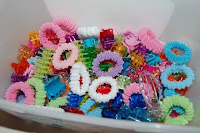
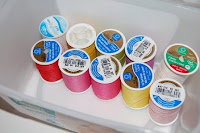
    If you are a mother, chances are, you have a few empty baby wipe tubs laying around the house. Refill packs are always nice, but sometimes its nice to grab the “free tubs” that we can score from using coupons. I had a few empty tubs laying around the house and I was very hesitant on throwing them away. I knew something could be done with them. Instead of throwing them away, I decided to show you how you can reuse baby wipe tubs. Here are seven items that you can store in baby wipe tubs.
     
    Hair accessories:
    Crayons:
    Puzzle Pieces or Small Toys:
    Thread:
    Ribbon:
    Free Samples:
    Coupons:

    You could store so much more in the empty baby wipe tubs and use a permanent marker to label the sides of the boxes for storing. Baby wipe tubs make great containers!

    What would you store in empty baby wipe tubs?

  • Wait Before Making a Large Purchase

    making a large purchase

    You are flipping through the latest mail catalog and you see something in there with a pretty price tag that you think you HAVE to have. You get excited, your heart starts beating fast, and you are already daydreaming about what it would be like to have that item. If you are frugal, you start shopping around online trying to find the best deal and you still want that item NOW. In fact, you run to find your purse, take out your wallet and dig around through your credit cards for this new gadget that will change your life and make it better.

    WAIT!!!

    Are you sure you want that item? (You think, “yes, of course!”) But WAIT. Are you “really” sure you want that item?

    You have the little devil on one shoulder telling you to “Buy, buy, buy” (when you may already be in debt), and you have the Angel on the other shoulder saying, “Maybe you should wait! Will that really make your life better?”

    Temptation to buy is everywhere. It’s in your mailbox. It’s in your email and on the internet. It’s on your T.V. It’s the temptation to want to buy the latest high tech. gadget out or best selling item out there. Advertisers make you feel that if you buy this item, it will change your life–for the better. But, will it?

    Before you make a large purchase, consider waiting 15-30 days before making the purchase.

    A few months ago, I was tempted. I teach cycle classes at our local gym. I saw an advertisement for a stationary bike that I was interested in for practicing purposes, and I REALLY wanted it. I mean, I almost purchased it. This is a $500 bike I am describing. I was in the “I WANT IT NOW!” stage. I was excited! I decided to wait a day or two to shop around to find the better deal. Several days passed. I was still looking, but the excitement was wearing off. And here I am a few months later, and I don’t even want the bike anymore. That is not to say I wouldn’t want it in the future, but if I do get the urge to “want it badly” again, I will make sure I wait a few weeks before purchasing to make sure it is something that I know I want.

    If you plan to make a large purchase, ask yourself these ten questions:

    1. Is this a want or a need?
    2. Will this make me happy?
    3. How will this make me happy?
    4. Do I see myself using this a month from now? A year from now? Five years from now?
    5. Can I afford this?
    6. Do I have the money for this now or do I have to put it on credit?
    7. Where can I look to find the best deal for this item? Will it go on sale?
    8. How will this item be beneficial for others (family, friends)?
    9. Will my family be upset if I make this purchase?
    10. Will this item most likely end up at Goodwill or in a garage/yard sale?

    Then after you ask yourself these questions, I challenge you to wait 15-30 days before making the purchase to see if you still really want this item. If after that time you do still want it, then ask yourself the questions again and decide if you think the purchase is right for you.

    Do you wait before making large purchases? Have you made an large impulse purchase that you regret?