Frugal Living, Money Saving Tips, Freebies, and More!

  • 10 Ways to Cut Back-to-School Lunch Costs Without Boring Your Kids

    10 Ways to Cut Back-to-School Lunch Costs

    Back-to-school season already hits the wallet hard — new shoes, classroom supplies, and fees galore.

    But one often-overlooked expense?

    School lunches.

    Packing a daily lunch might seem like a budget-friendly option, but between pricey snacks, single-serve items, and wasted food, it can add up fast.

    If you’re looking for cheap lunchbox ideas for school, you’re in the right place.

    These budget-friendly back-to-school lunch tips will help you save money on school lunches without serving your kids the same PB&J every day.

    1. Stock Up on Cost-Effective Lunchbox Staples

    Instead of grabbing high-priced pre-packed items, focus on affordable lunch staples you can mix and match:

    • Tortillas: Cheaper than bread and more versatile. Think wraps, roll-ups, and quesadillas.
    • Rice and beans: Make burritos, rice bowls, or taco salads.
    • Hard-boiled eggs: Inexpensive protein that travels well.
    • Carrot sticks, cucumbers, and apples: Budget produce that lasts and doesn’t bruise easily.
    • String cheese or block cheese cut into cubes: A protein boost that doesn’t break the bank.

    Money-saving tip: Shop sales and clearance racks. Use apps like Ibotta or Fetch Rewards for cashback on staple items.

    2. Buy in Bulk and Portion Ahead

    Buying in bulk isn’t just for big families — it’s for smart families.

    Here’s how to make it work:

    • Purchase large bags of pretzels, trail mix, or crackers and portion them into these reusable containers. The containers have 4 spaces for snack items and are great for kids.
    • Bulk deli meat and cheese from the grocery store can be sliced at home for much cheaper than individually packed versions.
    • Buy multipacks of yogurt or applesauce instead of single-serve pouches.

    Prep tip: Prep and freeze sandwiches (yes, even PB&J freezes well!) so you’re not scrambling each morning. Just pull one out and it’ll thaw by lunch.

    3. Use What You Already Have – Get Creative with Leftovers

    Think beyond dinner — think tomorrow’s lunch.

    Examples:

    • Chicken for dinner? Make chicken wraps with lettuce and cheese the next day.
    • Leftover taco meat? Toss it in a tortilla with beans and salsa.
    • Mac and cheese? Add some frozen peas or hot dogs for a next-day treat. Here’s a bestselling Thermos, perfect for these leftovers.

    Using leftovers is one of the cheapest school lunch ideas for kids — and no, it doesn’t have to be boring!

    4. Avoid Single-Serve Convenience Items

    Individually packaged snacks are convenient but come at a premium.

    For example:

    • A 12-pack of single-serve applesauce pouches can cost $6+.
    • A 48 oz jar of applesauce is usually under $3 — that’s about 12 servings right there.

    Use refillable silicone pouches or small reusable containers instead. You’ll save money and reduce waste.

    5. Use Reusable Lunch Gear

    Invest once and save all year.

    What to grab:

    Using reusable lunch supplies helps cut down on daily waste and the cost of disposable bags and containers.

    6. Rotate 5 Simple, Cheap Lunches That Your Kids Actually Like

    Keep a school lunch rotation of 5 budget meals your child enjoys. This way, you’re not reinventing the wheel every week.

    Examples:

    1. Turkey and cheese wrap + grapes + pretzels
    2. DIY lunchables (crackers, ham, cheese cubes, fruit) *these containers are perfect for this!
    3. Pasta salad with veggies + fruit cup
    4. Peanut butter and banana sandwich + yogurt
    5. Cheese quesadilla + salsa cup + carrot sticks

    Kids thrive on routine, and this helps eliminate food waste and morning stress.

    7. Shop Seasonal Produce for Cheaper Snacks

    Fruit prices can fluctuate wildly depending on the season. Opt for seasonal fruits and veggies for lunchbox sides:

    • Fall: Apples, pears, carrots
    • Winter: Oranges, sweet potatoes (roasted wedges)
    • Spring: Strawberries, snap peas
    • Summer: Melons, cucumbers

    Bonus tip: Check out local farmer’s markets toward closing time when vendors slash prices to clear inventory.

    8. DIY Lunch Kits Instead of Buying Name Brands

    You don’t need to buy overpriced Lunchables or snack packs. Create your own “cool” kits with 4 compartment snack containers.

    Try:

    • DIY pizza lunch: Pack mini pitas, marinara, cheese, and pepperoni in compartments.
    • DIY taco kits: Small tortilla, shredded chicken, lettuce, and cheese in separate containers.
    • DIY snack box: Cheese cubes, grapes, popcorn, mini pickles.

    Kids love finger foods and the control of assembling their own lunch.

    9. Use a Weekly Lunch Planner

    A little meal planning goes a long way in preventing last-minute runs to the store or overspending.

    Try this system:

    • Pick 5 easy lunch ideas per week.
    • Shop for those specific items.
    • Prep anything you can ahead of time (cut fruit, portion snacks).

    Print out a free printable weekly menu plan to hang on the fridge. It keeps your shopping list focused and your budget in check.

    Get this free printable meal planner!

      We respect your privacy. Unsubscribe at anytime.

      10. Involve Your Kids in the Process

      Let kids help plan and pack their lunches. You’d be surprised how picky eaters open up when they have a say.

      Create a “Pick 1 from each list” system:

      • Main: sandwich, wrap, leftovers
      • Fruit/veg: apples, cucumbers, strawberries
      • Snack: popcorn, yogurt, crackers
      • Drink: water, milk, 100% juice

      This reduces waste from uneaten food and teaches them budgeting basics!

      Bonus: Budget Lunch Ideas Under $1 Per Meal

      Here are some super frugal school lunch combos under $1/meal:

      • PB&J + apple slices + pretzels
      • Hummus + pita bread + carrots
      • Cheese sandwich + raisins + popcorn
      • Pasta salad + banana + crackers
      • Bean and cheese burrito + orange wedges

      Frequently Asked Questions

      How do I pack a healthy lunch on a tight budget?

      Stick with affordable basics like whole grains, fruits in season, simple proteins (eggs, beans), and use leftovers creatively. Avoid processed or single-serve items when possible.

      How do I keep lunch interesting without spending more?

      Variety is key! Change up the bread (wraps, mini pitas), try themed lunches (DIY taco day), and let your child help pack to ensure they’ll actually eat it.

      What are some good cheap proteins for school lunches?

      Eggs, beans, hummus, canned tuna, rotisserie chicken, and deli meat (bought in bulk) are all affordable options.

      How can I save money on lunchbox snacks?

      Buy larger containers and portion them yourself. Skip individually wrapped treats and use reusable containers. Consider homemade options like popcorn, trail mix, or muffins.

      What’s the best way to keep food fresh in a lunchbox?

      Use insulated lunch bags and add a reusable ice pack. Freeze juice boxes or yogurt tubes to keep lunches cool and safe to eat by lunchtime.

      Final Thoughts

      Packing school lunches doesn’t have to drain your wallet or your time.

      With a little strategy, you can send your kids off each day with nutritious, affordable, and non-boring lunches — and keep more money in your pocket.

    • 7+ Thrifty Beach Day Hacks

      Ways to Save Money While Enjoying a Day at the Beach

      Summer is here, and a day at the beach is the perfect way to relax, soak up some sun, and create lasting memories.

      However, beach trips can quickly become expensive with all the food, activities, and gear needed.

      Don’t worry! I’ve got you covered with these thrifty beach day hacks to help you enjoy a fantastic day by the ocean without breaking the bank.

      Pack Your Own Snacks and Drinks

      One of the easiest ways to save money on a beach day is to bring your own snacks and drinks. Beachside vendors can be pricey, and a family of four can easily spend a small fortune on food alone.

      Pack a cooler with sandwiches, fruit, chips, and plenty of water. For a refreshing treat, freeze water bottles or juice boxes the night before – they’ll help keep everything cool and provide a cold drink later in the day.

      DIY Beach Toys

      Beach toys are a must for kids, but they can be surprisingly expensive. Instead of buying new ones, get creative with items you already have at home.

      Plastic containers, kitchen utensils, and even old Tupperware can make excellent sandcastle-building tools. You can also check out your local dollar store for affordable beach toys.

      Utilize Free Parking

      Beach parking can be a significant expense. Look for free parking options near the beach, even if it means walking a bit further.

      Many towns also offer free or discounted parking after a certain time in the afternoon, so plan your trip accordingly.

      Reuse and Repurpose

      Instead of buying new beach gear, look around your home for items you can repurpose. Old sheets or blankets make excellent beach towels, and large tote bags can double as beach bags.

      If you have a pool float, bring it along instead of buying a beach lounger.

      Plan Affordable Beach Activities

      You don’t need to spend money on beach rentals or activities to have a great time. Bring along a frisbee, volleyball, or kite for hours of fun.

      Beachcombing, building sandcastles, and collecting shells are all free activities that can keep everyone entertained.

      Share the Costs

      If you’re heading to the beach with friends or family, consider sharing the costs of larger items. Split the cost of renting an umbrella or beach chairs, and take turns bringing food and drinks.

      This way, everyone contributes, and no one feels the financial burden alone.

      Take Advantage of Nature

      Enjoy the natural beauty of the beach by taking long walks, swimming, or exploring tide pools. These activities are free and provide an opportunity to connect with nature and enjoy the peaceful surroundings.

      Use What You Have

      Before buying new items for your beach trip, take inventory of what you already have at home. An old pair of sunglasses, a hat, or an oversized shirt can serve as sun protection.

      The less you need to buy, the more you save.

      Look for Deals and Discounts

      If you do need to buy something for your beach day, look for deals and discounts. Check online for coupons, shop sales, or visit thrift stores for affordable beach gear.

      You can often find gently used items at a fraction of the cost.

      Final Thoughts

      A day at the beach doesn’t have to be expensive. With a little planning and creativity, you can enjoy a fun, memorable beach day without spending a fortune.

      Pack your own snacks, get crafty with beach toys, and take advantage of the natural beauty around you. Your wallet (and your family) will thank you!

      Do you have any favorite frugal beach day hacks? Share them in the comments below!

    • 23 Simple Ways to Slash Your Summer Grocery Bill

      Tired of high grocery bills? Here are simple ways to slash your summer grocery bill this summer!

      Summer is a time for fun, relaxation, and enjoying the great outdoors. But with kids home from school and more gatherings with friends and family, your grocery bill can skyrocket.

      Fear not! Here are 21 creative and effective ways to slash your summer grocery bill, so you can enjoy the season without breaking the bank.

      23 Simple Ways to Slash Your Summer Grocery Bill

      1. Plan Your Meals

      Meal planning is a game-changer. Spend a little time each week planning your meals around what’s on sale and what you already have in your pantry. This reduces food waste and ensures you’re only buying what you need.

      Creating an Efficient Summer Meal Plan to Save Time and Money

      2. Shop Seasonal Produce

      Seasonal fruits and vegetables are not only fresher but also cheaper. Visit your local farmer’s market or look for seasonal produce at the grocery store to get the best deals.

      Farmers Market Finds: Fresh, Frugal Meals for Summer

      3. Grow Your Own Herbs and Vegetables

      Even if you don’t have a green thumb, growing your own herbs and vegetables can save you money. Start with easy-to-grow plants like basil, mint, tomatoes, and peppers. You can grow them in pots if you don’t have a garden.

      Tips for Growing a Garden on a Dime

      4. Buy in Bulk

      Purchasing in bulk can save you a significant amount of money. Items like grains, beans, nuts, and pasta are great for bulk buying. Just make sure you have enough storage space.

      5. Take Advantage of Sales and Coupons

      Keep an eye out for sales and use coupons whenever possible. Combine store sales with manufacturer coupons for maximum savings.

      Sign up for P&G Good Everyday Rewards and save on your favorite products like Tide, Crest, Bounty, and 60+ of your favorite brands! It’s FREE to join!

      6. Use a Cash-Back Credit Card

      If you’re disciplined about paying off your credit card each month, using a cash-back credit card for your grocery purchases can put some money back in your pocket.

      7. Shop at Discount Stores

      Stores like Aldi offer great prices on groceries. Don’t be afraid to check out local discount grocers for lower-priced alternatives.

      8. Cook from Scratch

      Convenience foods come with a higher price tag. Cooking from scratch not only saves money but is also healthier. Make large batches of meals and freeze them for quick and easy dinners.

      Why Cooking from Scratch Can Help Save You Money

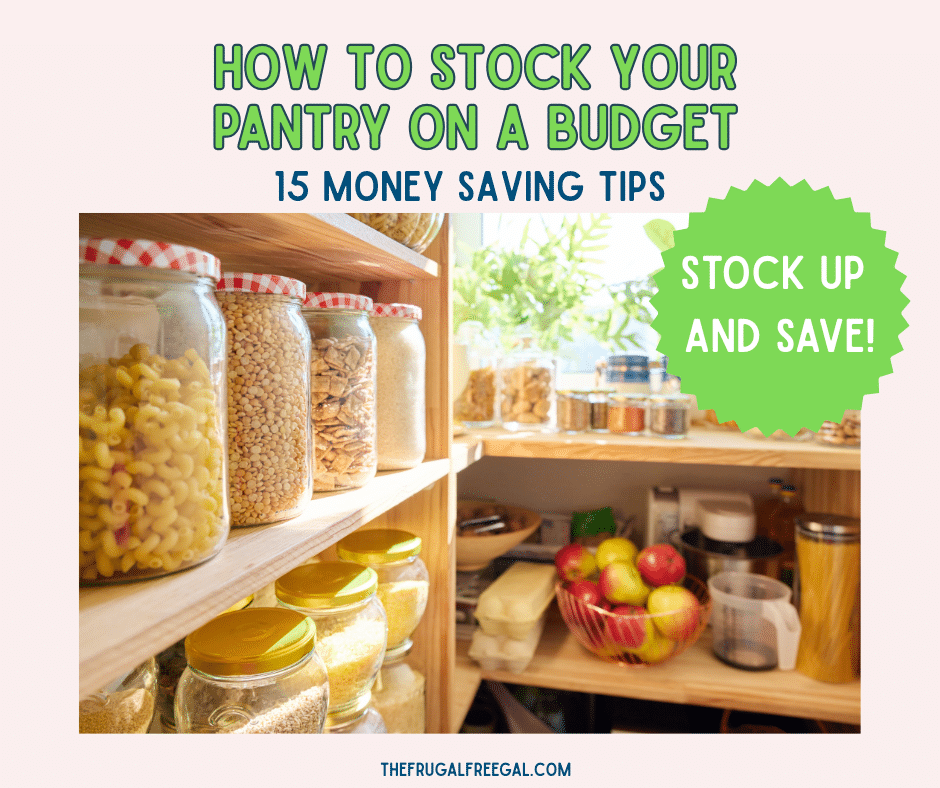
      How to Stock Your Pantry on a Budget

      9. Make a Shopping List and Stick to It

      Impulse buys can quickly add up. Make a list before you head to the store and stick to it. Avoid shopping when you’re hungry to resist those tempting extras.

      FREE Printable Grocery List

      10. Use Leftovers Creatively

      Don’t let leftovers go to waste. Transform them into new meals. For example, roast chicken can become chicken salad or a chicken stir-fry.

      11. DIY Snacks and Drinks

      Pre-packaged snacks and drinks are convenient but expensive. Make your own granola or oatmeal bars, trail mix, and flavored waters. This not only saves money but also allows you to control the ingredients.

      12. Join a Grocery Co-Op

      Grocery co-ops often offer lower prices on bulk items and produce. Plus, you can get involved in your local community and meet like-minded frugal friends.

      13. Cut Back on Meat

      Meat is usually one of the most expensive items on the grocery list. Incorporate more plant-based meals into your diet. Beans, lentils, and tofu are affordable and nutritious alternatives.

      14. Preserve Summer Bounty

      When summer produce is at its peak and cheapest, buy in bulk and preserve it. Canning, freezing, and drying fruits and vegetables can provide you with off-season savings.

      15. Shop with a Calculator

      Keep a running tally of your spending while you shop. This helps you stay within your budget and makes you more conscious of your spending habits.

      16. Use Store Loyalty Programs

      Many grocery stores offer loyalty programs that give you access to special discounts and coupons. Sign up and take advantage of these savings.

      17. Host Potluck Gatherings

      Instead of shouldering the entire cost of a summer barbecue or party, host a potluck. Ask guests to bring a dish to share, which lightens the financial load and adds variety to the meal.

      If you do decide to grill, here are some tips to save:

      How to Save Money on Grilling this Summer

      18. Check Unit Prices

      Sometimes, larger packages aren’t the best deal. Always check the unit price (price per ounce, pound, etc.) to make sure you’re getting the best value for your money.

      19. Shop the Perimeter

      The perimeter of the store usually has the freshest and least processed foods. Focus on these areas to buy healthier and often cheaper items.

      20. Batch Cook and Freeze Meals

      Prepare large quantities of your favorite meals and freeze them in portions. This not only saves money but also time on busy days.

      21. Make Your Own Cleaning Supplies

      Many common household items can double as cleaning supplies. Vinegar, baking soda, and lemon juice can be used to make effective, non-toxic cleaning solutions at a fraction of the cost of store-bought cleaners.

      How to Make Your Own Household Cleaners

      FREE Printable Home Cleaning Planner

      22. Use Reusable Bags

      Many stores offer discounts for bringing your own bags. It’s a small savings, but it adds up over time and helps the environment.

      23. Save with Ibotta and Fetch Rewards

      Ibotta and Fetch are fantastic apps for saving money on groceries. With Ibotta, you can earn cash back on everyday purchases by scanning your receipts and redeeming offers.

      Join Ibotta

      Fetch Rewards makes it even easier—simply scan your grocery receipts, and you’ll earn points that can be redeemed for gift cards.

      Join Fetch Rewards

      Both apps are user-friendly and offer a wide range of participating stores and products. Stack these savings with coupons and sales for maximum benefits.

      By incorporating these frugal strategies into your routine, you can enjoy a bountiful summer without straining your budget.

      Remember, every small saving adds up, and with a little planning and creativity, you can slash your summer grocery bill and make the most of the season.

      Happy saving!

    • Simple and Cheap Summer Decorations

      DIY Ideas to Bring Summer Vibes into Your Home

      Summer is here, and it’s the perfect time to infuse your home with the vibrant, cheerful vibes of the season.

      If you’re looking for budget-friendly ways to decorate, we’ve got you covered. Here are some simple and inexpensive DIY ideas to bring those summer vibes into your home without breaking the bank.

      Watercolor Hawaiian Paper Leis

      This fun and easy craft project is perfect for kids and adds a splash of tropical color to any room.

      Materials:

      • White coffee filters
      • Watercolor paints
      • Paintbrushes
      • String or yarn
      • Scissors

      Instructions:

      1. Flatten the coffee filters and paint them with watercolors in bright, summery colors. Let them dry completely.
      2. Once dry, fold each coffee filter in half and then in half again to create a cone shape.
      3. Cut a small hole at the pointed end of each cone.
      4. String the painted coffee filters onto a piece of string or yarn, alternating colors as desired.
      5. Tie the ends of the string together to create a beautiful, colorful lei to hang around your home.

      Mason Jar Lanterns

      Create a warm, cozy atmosphere with these charming lanterns.

      Materials:

      • Mason jars
      • Tea light candles or battery-operated candles
      • Sand or small pebbles
      • Ribbon or twine

      Instructions:

      1. Fill the bottom of each Mason jar with a layer of sand or small pebbles.
      2. Place a tea light candle or battery-operated candle on top of the sand or pebbles.
      3. Tie a piece of ribbon or twine around the neck of the jar for a decorative touch.
      4. Light the candles in the evening to enjoy a soft, ambient glow.

      Beach-Inspired Centerpiece

      Bring the beach to your table with this simple centerpiece.

      Materials:

      • Large glass bowl or vase
      • Sand
      • Seashells
      • Small driftwood pieces
      • Starfish (optional)

      Instructions:

      1. Fill the glass bowl or vase with a layer of sand.
      2. Arrange seashells, small pieces of driftwood, and starfish on top of the sand.
      3. Place the centerpiece on your dining or coffee table to instantly create a beachy vibe.

      DIY Summer Bunting

      Add a festive touch to any room with a homemade bunting.

      Materials:

      • Colorful cardstock or scrapbook paper
      • String or twine
      • Scissors
      • Hole punch

      Instructions:

      1. Cut the cardstock or scrapbook paper into triangle shapes.
      2. Punch two holes at the top corners of each triangle.
      3. Thread the string or twine through the holes, stringing the triangles together.
      4. Hang the bunting across a wall, doorway, or window for a cheerful summer decoration.

      Fruit Slice Coasters

      These coasters are not only practical but also add a fun, summery touch to your home.

      Materials:

      • Cork coasters
      • Acrylic paint
      • Paintbrushes
      • Clear sealant spray

      Instructions:

      1. Paint the cork coasters to look like slices of your favorite fruits (e.g., watermelon, lemon, orange, lime).
      2. Let the paint dry completely.
      3. Spray a coat of clear sealant to protect the paint.
      4. Use the coasters on your coffee table or dining table for a pop of color.

      Flower Garland

      Brighten up any room with a beautiful flower garland.

      Materials:

      • Artificial flowers
      • String or twine
      • Hot glue gun

      Instructions:

      1. Cut the stems off the artificial flowers, leaving just the heads.
      2. Glue the flower heads to the string or twine, spacing them out evenly.
      3. Hang the garland along a wall, mantel, or window for a lovely floral accent.

      These DIY decorations are not only affordable but also a great way to spend some quality crafting time with your family.

      With a little creativity and a few simple materials, you can transform your home into a summer paradise.

      Happy decorating!

    • Summer Savings: Frugal Ways to Keep Cool Without an Air Conditioner

      As summer’s warmth wraps us in its embrace, it’s crucial to find ways to keep our homes cool.

      With the rising costs of electricity and concerns about the environment, many of us are seeking alternative methods of cooling that won’t break the bank.

      Cool Off Your Summer Air Conditioning Bill with These 5 Tips

      Today, we’ll explore several frugal ways to keep cool during the summer months, without the need for an air conditioner.

      Embrace Natural Ventilation

      One of the easiest and most cost-effective ways to cool your home is to take advantage of natural ventilation.

      During cooler parts of the day, such as early morning or late evening, open windows to let in fresh air.

      Cross ventilation can be particularly effective. To achieve this, open windows on opposite sides of the house, promoting a cool breeze that sweeps across your home.

      Invest in Window Coverings

      Consider investing in high-quality window coverings. Light-colored blinds, curtains, or shades can reflect away the sun’s hot rays, making a noticeable difference to your home’s temperature.

      If possible, use reflective or insulating window film for even greater heat reduction. Although there’s an upfront cost, these coverings will pay for themselves in energy savings over time.

      Cool Your Body, Not Your Space

      Remember, it’s not just about cooling your home; it’s also about cooling yourself. Stay hydrated by drinking plenty of water, and consume cool foods like salads, fruits, and ice pops.

      Wear loose, light-colored clothing made from natural fibers like cotton or linen, which can help your body stay cool by wicking away perspiration.

      Consider cooling rags to place around your head and neck to keep cool, too.

      Strategic Fan Use

      Fans can be incredibly effective at circulating air and creating a wind-chill effect. Ceiling fans should be set to rotate counter-clockwise in the summer, which pushes cool air down to the floor.

      Portable fans can also be strategically placed to blow hot air out of a window, or positioned across from a window to circulate a cool breeze.

      Another trick is to place a bowl of ice or a wet cloth in front of the fan. As the ice melts or the water evaporates, it will cool the air being circulated by the fan, creating a refreshing, air-conditioned effect.

      Smart Landscaping

      If you’re willing to make a long-term investment, consider smart landscaping.

      Planting shade trees and greenery around your home can block the sun’s rays, significantly reducing the amount of heat that enters your home.

      Vines like ivy can also provide a cooling effect when grown on the walls of your house. This solution requires time and patience, but the aesthetic and cooling benefits are worth it.

      Keep Heat-Generating Activities to a Minimum

      Many household activities generate heat, from cooking and baking to running the dishwasher or dryer.

      Try to schedule these activities for cooler times of the day. Instead of using the oven, consider outdoor grilling, or prepare no-cook meals like salads and sandwiches.

      Upgrade Your Bedding

      Heavy bedding can trap heat and make sleeping uncomfortable. Instead, opt for lightweight, breathable sheets made from materials like cotton or bamboo.

      Some people even swear by the “Egyptian method” of sleeping: dampen a sheet or towel in cool water, wring it out, and use it as a blanket.

      As the water evaporates, it helps to lower your body temperature.

      Create a DIY Air Conditioner

      If you’re in a real pinch, create a DIY air conditioner by placing a shallow pan or bowl full of ice in front of a fan. The breeze will pick up cold water from the ice’s surface as it melts, creating a cooling mist.

      In conclusion, while summer weather can be relentless, there are plenty of frugal, eco-friendly ways to stay cool without running an air conditioner.

      Remember, every little bit counts. Even if these tips reduce the temperature in your home by just a few degrees, they could still make the difference between a restless night and a good night’s sleep, while saving you money and reducing your carbon footprint.

      Stay cool and enjoy the summer!

    • Creating an Efficient Summer Meal Plan to Save Money and Time

      With the summer season in full swing, it’s time to revamp our meal planning strategies.

      Creating an efficient summer meal plan not only helps us save money, but it also saves us valuable time that can be better spent enjoying the warm weather and engaging in fun activities.

      FREE Printable Meal Planners

      Today, we will explore practical tips and tricks to help you create a budget-friendly and time-saving meal plan that suits your needs. So, grab a pen and paper and let’s get started!

      Assess Your Needs and Set Goals

      Before diving into meal planning, take a moment to assess your needs and set goals for the summer.

      Consider factors like your budget, dietary restrictions, family size, and preferred cooking style. This evaluation will help you make informed decisions when selecting recipes and ingredients.

      Shop Smart and Utilize Seasonal Produce

      One of the keys to a frugal meal plan is shopping smart. Take advantage of seasonal produce as it tends to be more affordable and of better quality.

      Visit local farmers’ markets or consider joining a community-supported agriculture (CSA) program.

      By incorporating fresh fruits and vegetables into your meal plan, you not only save money but also provide your family with nutritious and delicious meals.

      Plan for Theme Nights

      Theme nights can be a fun way to spice up your meal plan and make it more efficient.

      Consider designating specific nights for different types of cuisine such as Mexican, Italian, or Asian. This approach allows you to reuse ingredients throughout the week while still enjoying diverse flavors.

      For instance, if you have leftover grilled chicken from your Mexican-themed night, you can repurpose it in a chicken stir-fry for your Asian-themed night.

      Embrace Batch Cooking and Freezing

      Batch cooking is a game-changer when it comes to saving time and money. On a designated day, prepare larger quantities of meals that can be easily frozen and enjoyed later.

      This strategy not only eliminates the need for last-minute takeout but also prevents food waste. Invest in high-quality freezer-safe containers and label them with the meal name and date for easy reference.

      You can even create a freezer inventory list to keep track of what you have on hand.

      Utilize Slow Cookers and Instant Pots

      During the summer, the last thing you want is to spend hours slaving over a hot stove.

      Slow cookers and Instant Pots are fantastic tools for creating delicious meals with minimal effort.

      These appliances allow you to prepare meals in advance, set timers, and have dinner ready by the time you return home from work or outdoor activities.

      From tender pulled pork to flavorful soups and stews, the possibilities are endless.

      Make Meal Prepping a Habit

      Meal prepping is a frugal lifesaver, particularly during the busy summer months. Set aside a dedicated day each week to plan and prepare your meals in advance.

      Chop vegetables, marinate proteins, and assemble ingredients for quick and easy assembly throughout the week.

      Invest in meal prep containers to portion out meals and snacks, ensuring that you stay on track with your healthy eating goals.

      Creating an efficient summer meal plan doesn’t have to be a daunting task.

      By assessing your needs, shopping smart, incorporating theme nights, embracing batch cooking and freezing, utilizing slow cookers and Instant Pots, and making meal prepping a habit, you can save both time and money while still enjoying delicious and nutritious meals.

      Remember, the key is to find a system that works for you and your family. So, start implementing these tips and enjoy a stress-free summer with more time and funds to dedicate to the activities and experiences that truly matter.

      Cheers to efficient and frugal meal planning!

      Frequently Asked Questions

      Why is meal planning important for saving money and time during the summer?

      Meal planning helps you avoid last-minute takeout or impulse grocery shopping, saving you money. It also saves time by allowing you to prepare meals in advance and streamline your cooking process.

      How do I assess my family’s meal planning needs and set realistic goals?

      Consider factors such as dietary preferences, budget, family size, and available time for cooking. Set realistic goals based on your circumstances, such as cooking a certain number of meals per week or reducing food waste.

      What are some tips for smart shopping and utilizing seasonal produce in my meal plan?

      Shop with a list, compare prices, and take advantage of sales. Utilize local farmers’ markets for affordable, fresh, and seasonal produce. Plan meals around the fruits and vegetables that are in season to save money.

      How can I incorporate theme nights into my summer meal plan for variety and efficiency?

      Designate specific nights for different types of cuisine, such as Mexican, Italian, or Asian. This allows you to reuse ingredients and spices, saving both time and money while adding variety to your meals.

      What are the benefits of batch cooking and freezing meals? How can I get started?

      Batch cooking saves time by preparing larger quantities of meals that can be frozen and enjoyed later. It reduces the need for daily cooking and prevents food waste. Start by selecting meals that freeze well, invest in freezer-safe containers, and label them for easy identification.

      How can I make the most out of slow cookers and Instant Pots during the summer months?

      Slow cookers and Instant Pots allow for hands-off cooking and minimize the use of heat in the kitchen during hot summer days.

      Use them for recipes like pulled pork, soups, stews, and even summer-friendly dishes like barbecue chicken or sweet potato chili.

      What are some strategies for successful meal prepping? How can I make it a habit?

      Set aside a dedicated day each week for meal prepping. Plan your meals, chop vegetables, marinate proteins, and portion out ingredients in advance. Use meal prep containers and create a system that works for you to make it a habit.

      How can I effectively repurpose leftovers to minimize food waste and save money?

      Get creative with repurposing leftovers by turning them into new meals. For example, leftover grilled chicken can be used in salads, sandwiches, or stir-fries.

      Consider meal components that can be easily transformed and incorporate them into your meal plan.

      What are some budget-friendly and time-saving recipe ideas for summer meal planning?

      Look for recipes that utilize affordable ingredients and require minimal prep and cooking time.

      Salads, wraps, grain bowls, and sheet pan meals are great options. Explore online recipe resources for specific ideas that suit your dietary preferences.

      Are there any resources or tools that can assist me in creating an efficient summer meal plan?

      Online recipe websites, meal planning apps, and cookbooks focused on meal prepping can be valuable resources.

      Additionally, utilizing grocery store flyers, budgeting apps, and meal planning templates can help you stay organized and save money.